Explore our top-tier environmental monitoring modules, engineered with high-precision chips and seamless dynamic networking capabilities.
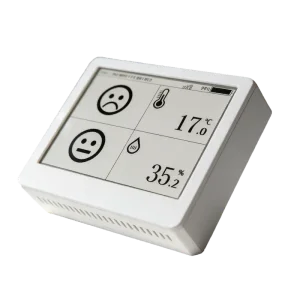
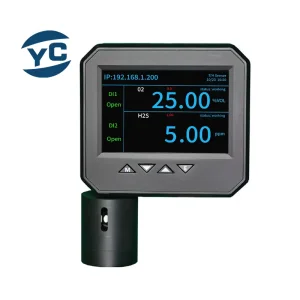
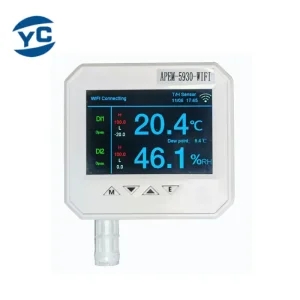
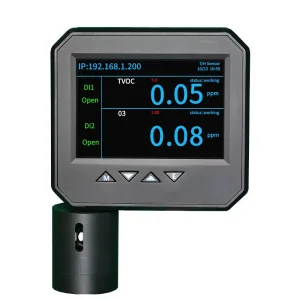
Modern industries are shifting from macro-environmental monitoring to hyper-localized micro-climate sensing. High-density data centers, pharmaceutical cold chains, and semiconductor fabrication bays require real-time, highly reliable temperature and relative humidity tracking. This transition has turned simple digital display gauges into connected industrial nodes capable of computing dew point, vapor pressure, and atmospheric changes on the edge.
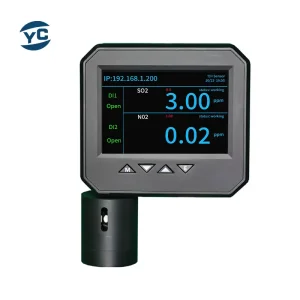
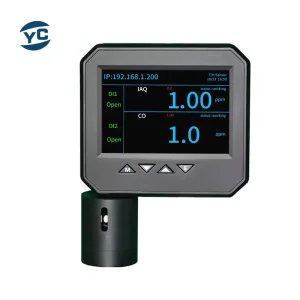
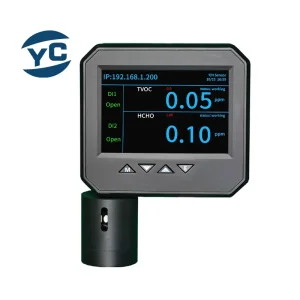
We are witnessing a structural surge in the demand for integrated "Sensor Fusion" devices. OEM clients no longer seek isolated temperature metrics. Market leaders require modules that package thermistors and polymer relative humidity sensors alongside atmospheric pressure units and chemical sensors (CO₂, TVOCs, HCHO, NO₂). This integration minimizes physical cabling, optimizes system engineering footprints, and dramatically simplifies multi-point data visualization.
Reliability in deep industrial or underground zones is a persistent challenge. Wireless LoRaWAN networks are filling this niche, offering stable range metrics over kilometers without high power penalties. Concurrently, Power-over-Ethernet (PoE) architectures serve as the backbone for smart office spaces and research laboratories, supplying constant DC operating voltage and Gigabit data transport over a single run of standard Cat6 infrastructure.
Established in 2007, Beijing Yingchuanglihe Electronic Technology Co., Ltd. (Yclisensors) stands at the global vanguard of advanced environmental sensing design, development, and scalable production.
Our custom sensor arrays are built with Swiss Sensirion capacitive polymers and German-engineered thermistors. This integration ensures exceptional long-term stability (<0.1°C drift annually) and highly precise, repeatable physical measurements.
We manufacture in strict compliance with international testing frameworks. Every device shipped holds valid CE, FCC, and RoHS certifications. We maintain a full traceability chain for metrological calibration and component verification.
Backed by 5 automated assembly lines, we guarantee consistent production cycles. Our technical engineering desks operate on an 8-hour Service Level Agreement (SLA) response window for all global OEM design updates.
For nearly two decades, we have continuously pushed the boundaries of network-connected environmental sensing technology.
Company founded. Engineered some of the first intelligent environmental monitoring terminals on native TCP/IP network layers with proprietary management software.
Partnered with Mocha Software to launch the TH-5939 series, standardizing native SNMP protocol support for enterprise IT operations.
Cooperated with Swiss COMLAB to deliver the TH-5869 protective Ethernet terminal, deployed across China’s high-speed rail network corridors.
Collaborated with Founder Technology to pioneer the APEM-6100, one of the earliest environmental monitoring modules built on Power over Ethernet (PoE) technology.
Worked with Foxconn to establish our sensor hardware as a benchmark standard across major cleanroom electronics assembly plants.
Collaborated with Baidu to deploy the next-gen APEM-5900 intelligent terminal throughout the landmark Yangquan Mega Data Center project.
Launched a specialized outdoor cabinet monitoring platform, deployed on expressway ETC networks engineered by Huawei and China Merchants Huaruan.
R&D deep-dive into autonomous vehicle road tests. Designed and delivered integrated edge computing gateways for Beijing's municipal pilot programs.
Established joint business divisions with Beijing Enterprises Water Group and co-founded a Beidou business division with BUCEA. Obtained full IDC business qualifications.
How procurement directors and hardware engineers evaluate and select OEM digital temperature and humidity sensor components.
Industrial environments subject digital gauges to particulate loading, humidity spikes, and chemical outgassing, leading to sensor drift. To counter this, Yclisensors integrates high-grade Swiss and German semiconductor dies with customized protective hydrophobic membranes. This advanced design ensures long-term accuracy, extending standard calibration cycles from 6 months to 2-3 years.
A key friction point for system integrators is adapting legacy sensors to modern software stacks. Our APEM-5930 architecture resolves this by supporting multiple protocols simultaneously. Out of the box, our devices transmit data via Modbus-TCP, SNMP, MQTT, and HTTP GET/POST APIs, facilitating direct integration into SCADA, DCIM, or custom cloud platforms.
Sensing hardware deployed in extreme environments must withstand demanding physical conditions. We offer dynamic mechanical customization options, including IP65-rated enclosures and remote sensing probes with standard 1 to 5-meter braided cables. This separation isolates the network electronics from extreme conditions like high-temperature drying ovens or deep cryogenic storage freezers.
How Yclisensors combines cutting-edge automation with deep structural supply chain advantages to deliver premium sensing hardware globally.
Our manufacturing base in Beijing is integrated directly into China's world-leading electronics component ecosystem. From rapid SMT array fabrication to fast-turn tooling and mechanical molding, we minimize supply chain middle steps. This optimized structure allows us to transition custom ODM concepts to functional prototypes in as little as 10 to 14 business days.
Quality control is fully automated at our facility. Every single APEM series module is calibrated inside high-accuracy temperature and humidity environmental chambers. This system automatically cross-references and calibrates data points against certified primary standards, eliminating manual testing errors and keeping product defect rates below 0.05%.
To protect our international OEM clients from unpredictable shipping backlogs, we maintain structured buffers of key electronic components, microprocessors, and sensor dies. This proactive management guarantees that our international production runs remain insulated from global logistics challenges, ensuring on-time delivery even during periods of tight raw-material supply.
Our high-precision digital gauges are deployed across diverse industries to monitor and safeguard mission-critical environments.
Preventing thermal runaway and managing moisture levels is essential for high-density servers. Our PoE and WiFi-enabled sensors are deployed at intake grilles to provide real-time thermal profiles, helping data centers optimize cooling and reduce Power Usage Effectiveness (PUE) metrics.
Pharmaceutical production and delicate research laboratories operate under strict, regulated parameters. Our APEM-5930P measures precise micro-differential air pressures alongside temperature and humidity, helping facilities maintain sterile environments and prevent cross-contamination.
From raw materials storage to temperature-sensitive biological goods, keeping precise records is essential for quality control. Our multi-parameter data loggers record and store environmental metrics locally, ensuring data integrity even during network or power interruptions.
In-depth answers to common questions about calibration, integration protocols, and selecting the right environmental sensors.
Our sensors integrate Swiss-imported Sensirion capacitive polymer sensing elements for relative humidity and high-accuracy German thermistors for temperature. This hardware is supported by our proprietary digital signal filtering algorithms, which mitigate environmental noise and self-heating, ensuring a typical accuracy of ±0.3°C and ±2% RH.
Our PoE sensors conform to the IEEE 802.3af standard. This allows a single standard RJ45 ethernet cable to supply both DC electrical power and high-speed network communication. This eliminates the need for localized AC outlets, reducing installation costs by up to 40% and simplifying large-scale sensor layouts.
Yes. All of our APEM network sensors support industry-standard communication protocols, including Modbus-TCP, SNMP (v1/v2c/v3), HTTP GET/POST APIs, and MQTT. This broad compatibility enables seamless integration with legacy SCADA platforms, BMS, DCIM, and modern cloud-based analytics engines without proprietary middleware.
For high-temperature applications, we offer our APEM-5930E model with an extended probe. This design separates the measurement probe from the transmitter unit via a rugged, shielded cable. This allows the probe to be placed inside high-temperature chambers, ovens, or ducts while protecting the transmitter's processor and network interface.
Yes. Our advanced manufacturing capabilities allow us to customize our APEM-5930G series with multi-parameter sensor arrays. Depending on your application, we can integrate electrochemical and optical gas sensors to monitor Carbon Monoxide (CO), Ozone (O₃), Nitrogen Dioxide (NO₂), Sulfur Dioxide (SO₂), Oxygen (O₂), Hydrogen Sulfide (H₂S), TVOCs, and Formaldehyde (HCHO) alongside temperature and humidity.
Explore our full line of multi-parameter sensors and network loggers, designed to meet demanding industrial and environmental monitoring needs.
 YCLH Sensor