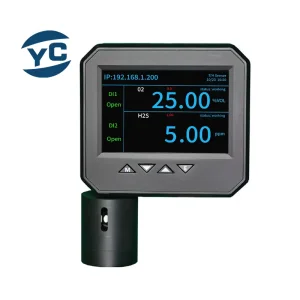
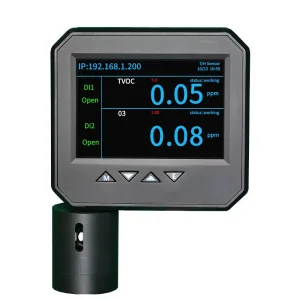
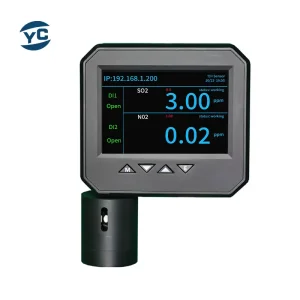
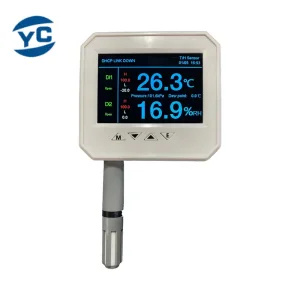
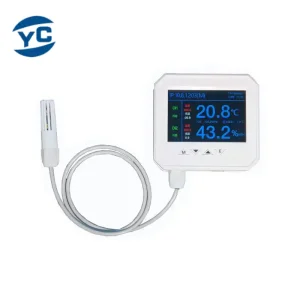
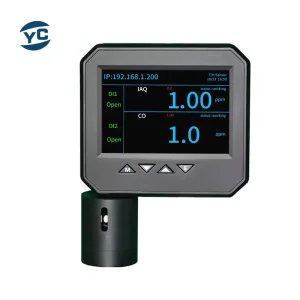
Our flagship environmental monitoring line includes multi-gas integration, standard Power over Ethernet (PoE) technology, and multi-channel telemetry gateways optimized for modern data center frameworks.
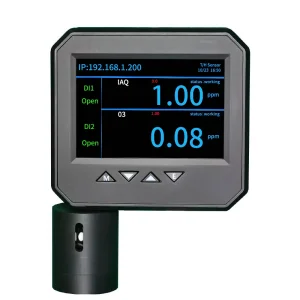
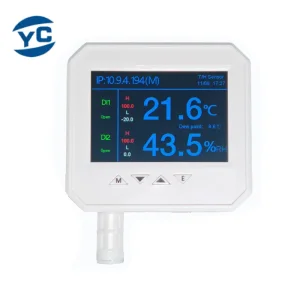
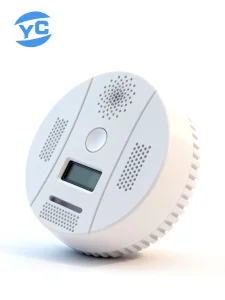
In the era of hyper-scale server infrastructures, advanced semiconductor manufacturing, and automated chemical supply lines, the management of microclimates has transitioned from a basic facility operational standard to a mission-critical risk control vector. Relative humidity (RH) is no longer measured merely to avoid static discharge or corrosion. Modern high-tech industries demand humidity metrics optimized to sub-percent error margins to maintain chemical kinetics equilibrium, avoid molecular condensation in micro-scale cleanrooms, and calculate structural dew points in liquid-cooled supercomputing nodes.
Beijing Yingchuanglihe Electronic Technology Co., Ltd. (Yclisensors) operates at the convergence of this physical-computational nexus. Since 2007, our engineering departments have customized microclimatic transmitters that translate subtle material capacitance swings into noise-resistant, digitally routed TCP/IP packet telemetry. We serve international industrial consultants, telemetry integration companies, and EPC contractors who construct infrastructure assets where raw data accuracy translates directly into physical security.
Integrating Switzerland-made CMOSens sensor chips and German solid-state micro-modules with integrated auto-calibration subroutines to secure long-term drifts under <0.5% RH per annum.
Direct support for Ethernet (IEEE 802.3af PoE), Wi-Fi, RS485 (Modbus-RTU), LoRaWAN (APEM-5616 Pro), and integrated SNMP architectures for robust enterprise monitoring integrations.
Concurrent telemetry of TVOC, O₃, CO, CO₂, H₂S, SO₂, HCHO, O₂, atmospheric pressure, and dew point within a single network node (APEM-5930G series) to save installation costs.
Standard low-cost consumer humidity sensors utilize basic organic polymer films that suffer from rapid material degradation when exposed to volatile chemical outgassing, localized thermal saturation, or continuous dew-point condensation cycles. Yclisensors bypasses these mechanical vulnerabilities by basing our standard designs on capacitive polymer sensing elements integrated onto specialized CMOS integrated circuits.
By embedding Switzerland-sourced microchips, our sensors evaluate humidity fluctuations via the dielectric shift of a specially structured polymer layer deposited between custom micro-electrodes. The chip's active circuitry features built-in thermal heating elements designed to automatically execute a self-cleaning cycle whenever the sensor encounters prolonged saturation, preventing electrochemical bias drift.
Moreover, each transmitter incorporates factory-calibrated polynomial correction tables stored directly inside the sensor's non-volatile EEPROM memory. This micro-level correction achieves a highly linear output path, boasting a typical humidity precision of ±2.0% RH and temperature tracking accurate to ±0.2°C across the entire operational envelope.
From early network integrations in 2007 to high-precision Beidou deformation projects, our technology lifecycle is verified by multi-scenario deployments alongside international tech conglomerates.
Yclisensors was established in Beijing. Our R&D team engineered the industry's first intelligent environmental monitoring terminals incorporating native TCP/IP networking protocols, accompanied by our first-generation monitoring database suites.
Formed a strategic collaboration with Mocha Software (a domestic network management leader) to integrate localized environmental hardware into their central system, releasing the SNMP-compatible environmental transmitter family (Model TH-5939).
Collaborated with Switzerland’s COMLAB to produce the custom TH-5869 high-protection environmental network devices, deployed within the critical communication cabins of key high-speed rail links (Beijing-Kowloon, Beijing-Shanghai, Wuhan-Guangzhou).
Launched the APEM-6100 in partnership with Founder Technology, marking one of the market's earliest adoptions of Power over Ethernet (PoE) technology in commercial climate telemetry.
Formed direct supply structures with Foxconn. Our tailored industrial transmitters were formalized as the microclimate testing benchmark for advanced PCB assembly workshops.
Partnered with Baidu to develop and supply the APEM-5900 intelligent network gateway arrays, establishing a massive footprint inside Baidu's iconic Yangquan Mega Data Center.
Broadened multi-scenario industrial tracking solutions. In 2021, Yclisensors was selected to co-develop localized environmental integration road boxes and edge-computing outdoor cabins for Beijing's elite Autonomous Driving Road Test projects.
Co-founded joint technical business branches with Beijing Enterprises Water Group and Beijing University of Civil Engineering and Architecture to integrate Beidou High-Precision deformation and smart sewage/water pipeline microclimates.
Through specialized hardware architectures and multi-protocol flexibility, Yclisensors supports complex technical integrations across global industries.
Modern liquid-cooled and high-density air-cooled data centers require rapid environmental polling to manage critical thermal profiles. Utilizing our APEM-5930 PoE series, operators place sensors directly at cold-aisle intakes and inside chassis modules to track relative humidity, temperature, and atmospheric pressure.
Integration with SNMP and Modbus-TCP lets automated infrastructure managers adjust variable-frequency fans and liquid coolant flow on the fly, preventing local condensation while meeting strict ASHRAE standards.
Pharmaceutical formulation and semiconductor photolithography demand strict microclimatic regulation. Even tiny fluctuations in humidity can ruin sub-micron silicon structures or destabilize active chemical formulas.
Our APEM-5930E (with extended probe options) places isolated, high-purity sensor elements directly inside sterile chemical chambers and cleanrooms, while the main transmitter remains safely outside. This setup resists chemical vapors and dynamic cleaning washdowns while retaining metrological precision.
In partnership with water groups like Beijing Enterprises Water, our sensors help secure critical underground piping, dynamic smart wells, and heavy roadside structures.
By combining humidity and pressure with specialized gas arrays, municipal teams can track sub-surface humidity and monitor high-risk chemical shifts (like O₂ deficiency or toxic H₂S buildup) inside maintenance access ports to ensure field crew safety.
As industrial IoT continues to evolve, environmental data acquisition must adapt. The Yclisensors technical division is actively expanding our roadmap to combine smart microchips with edge computing capabilities. Rather than simply logging analog variations, next-generation digital sensors will act as localized edge computers capable of evaluating anomaly matrices directly on the unit.
Expanding our hybrid dual-mode technology (seen in the APEM-5930W) to offer intelligent fallback configurations. If local Wi-Fi drops, transmitters seamlessly cache data locally and route essential telemetry through low-bandwidth LoRaWAN networks, ensuring zero monitoring downtime.
Integrating embedded machine learning algorithms directly into the sensor firmware. This allows the unit to analyze historical variations and predictively offset mechanical sensor drift over time, significantly extending physical calibration cycles in difficult environments.
Transitioning our flagship multi-gas systems (APEM-5930G series) toward micro-electro-mechanical system (MEMS) chip arrays. This transition reduces physical footprint, lowers power consumption, and provides high resistance to chemical contamination.
Our second tier of premium sensor hardware features tailored multi-gas units, high-pressure environmental trackers, and isolated extension-cable transmitters for versatile industrial deployment.
Yclisensors doesn't simply offer standard off-the-shelf transmitters; we are a dedicated R&D-led manufacturing partner. If your technical architecture requires specific structural profiles, non-standard communication protocols, or unique mechanical housings, our engineering team is fully equipped to design, prototype, and manufacture your tailored solution.
Clients specify target operational envelopes, mechanical form factor constraints, exact protocol configurations (SNMP, Modbus, MQTT, LoRa), and specialized sensor chip requirements.
Our Beijing lab develops custom PCB layouts and performs high-precision multi-point temperature and humidity calibrations inside state-of-the-art environmental test chambers.
Prototypes undergo strict electrical and structural validation testing to secure CE, FCC, and RoHS compliance, followed by mass production across our 5 automated high-throughput lines.
Deploying high-precision environmental sensors within critical corporate networks requires rigorous attention to software, security, and hardware compliance. Yclisensors designs every digital transmitter with robust network security in mind. Our modern firmware supports encrypted data routing and secure custom API integration, keeping your environmental metadata safe from local exploits or external intrusions.
To streamline integration into global supply chains, our full product catalog holds comprehensive CE, FCC, and RoHS certifications. Each unit is built with high-quality, flame-retardant materials to ensure reliable operation in demanding environments. Whether you are shipping to hyper-scale European data centers or deploying in automated factories across Southeast Asia, our logistics and trade compliance teams handle the details to guarantee smooth export delivery and hassle-free customs clearance.
Have technical questions about our environmental monitoring systems? Explore answers from our principal hardware engineering division below.
 YCLH Sensor