Explore our flagship hardware lineup featuring dual-mode telemetry, high-precision Swiss Sensirion chips, and robust Power-over-Ethernet (IEEE 802.3af) interfaces.
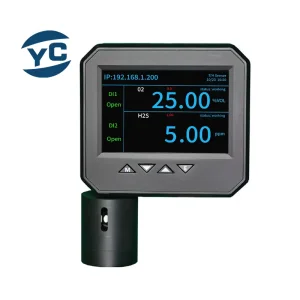
Custom Industrial-Grade Ethernet Data Logger engineered for real-time tracking of Oxygen, Hydrogen Sulfide, ambient temperature, and humidity levels.
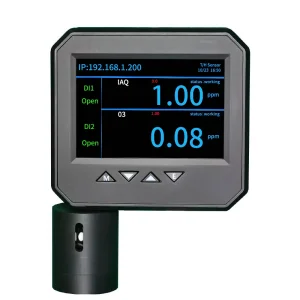
High-precision environmental sensor measuring ozone levels and primary indoor air quality metrics via Ethernet connectivity.
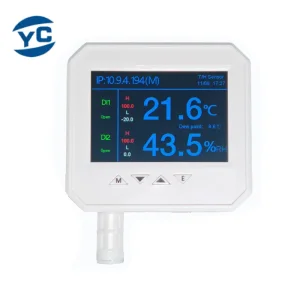
Standard Power over Ethernet monitoring node featuring high-stability sensors and a direct network bus configuration.
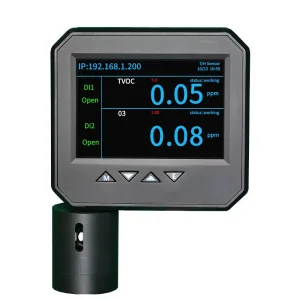
Integrated multi-gas and microclimatic monitor configured for volatile organic compound detection and ozone tracking.
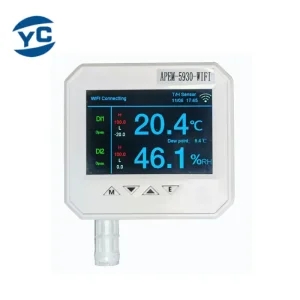
Wired and wireless dual-mode telemetry solution designed for dynamic smart building microclimates.
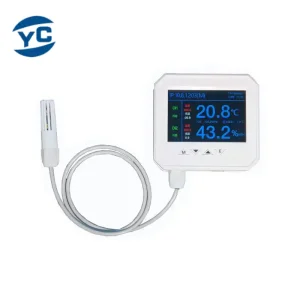
Equipped with a flexible external cabling architecture for monitoring deep within ducts, storage chambers, and server chassis.
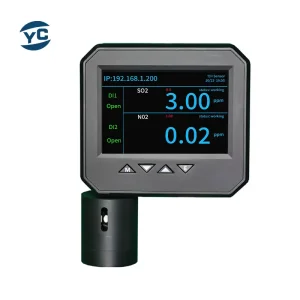
Engineered for specialized cleanroom monitoring and demanding chemical exposure applications.
Engineered for smart offices, building automation systems, and high-density office infrastructure integrations.
In today's data-driven industrial environments, monitoring microclimates is no longer just about preventing static charge or checking warehouse conditions. With the rise of high-density edge computing, automated cold storage facilities, and cleanrooms, tracking temperature and humidity has become critical to operational success.
Historically, facility operators had to choose between wired systems, which were highly reliable but expensive to install, and wireless sensors, which were easy to set up but prone to signal interference and battery failures. The introduction of hybrid PoE & WiFi environmental monitoring architectures has bridged this gap.
By combining the plug-and-play simplicity of PoE (delivering power and network data over a single Cat5e/Cat6 cable) with the flexible placement options of 2.4GHz/5GHz WiFi, modern facilities can design dual-path, fault-tolerant monitoring systems. This ensures continuous tracking of temperature, relative humidity, and dew point calculations even during power outages or network disruptions.
Understanding the strict requirements and operational hurdles faced by global procurement officers and system integrators.
Global pharmaceutical logistics demand strict adherence to FDA 21 CFR Part 11 and GAMP5 standards. Sensors must record data locally during network outages and export unalterable CSV/PDF logs to prevent compliance issues.
Modern data centers face varying heat levels due to fluctuating computing loads. Multi-point PoE sensors help cooling systems dynamically adjust to local conditions, preventing hot spots and optimizing Power Usage Effectiveness (PUE).
BMS system integrators need cross-compatibility. Our sensors support Modbus TCP, SNMP, and MQTT, allowing them to integrate with software platforms without requiring proprietary drivers.
At our Beijing facility, we utilize state-of-the-art SMT assembly lines, automated calibration rooms, and rigorous environmental stress testing chambers to ensure top-tier reliability.
Using imported chips from Switzerland and Germany to guarantee long-term accuracy and minimal drift.
Direct support for Modbus, HTTP, SNMP, and MQTT protocols for seamless setup.
Fully certified to meet international safety and environmental standards.
Dedicated R&D team offering tailored solutions, custom branding, and specialized housings.
Operating a modern factory in Beijing, Yingchuanglihe (YCLI) is a high-tech enterprise that combines design, manufacturing, and calibration under one roof. Our 1,500m² facility features automated testing systems to ensure every sensor meets international standards before shipment.
Our localization in China's tech ecosystem allows us to quickly source raw components, secure high-quality chipsets, and implement improvements faster than other manufacturers. This enables us to maintain stable lead times even during global supply chain challenges.
For global B2B buyers and wholesalers, this translates to competitive pricing, dependable delivery schedules, and the ability to customize hardware configurations. From custom probe extensions to specialized multi-gas sensor designs, our team is equipped to deliver tailored solutions.
Over 18 years of continuous innovation in industrial environmental monitoring systems and IoT hardware design.
Beijing Yingchuanglihe Electronic Technology Co., Ltd. was established. Launched our initial intelligent environmental monitoring software based on the TCP/IP protocol.
Collaborated with Mocha Software to introduce SNMP-supported environmental sensors (TH-5939). Partnered with Switzerland's COMLAB to implement the TH-5869 protective monitoring systems in high-speed rail lines.
Partnered with Founder Technology to launch the APEM-6100 PoE series. Collaborated with Foxconn to establish our systems as industry standard solutions for microclimate monitoring in production workshops.
Deployed APEM-5900 intelligent terminals in Baidu's Yangquan Data Center. Expanded our hardware portfolio with integrated outdoor cabinet monitors for Huawei and China Merchants Huaruan ETC systems.
Developed edge computing gateways for autonomous driving testbeds in Beijing. Provided core infrastructure and technical support for advanced intelligent computing centers.
Co-founded specialized divisions for Smart Pipelines with Beijing Enterprises Water Group, and Beidou High-Precision Deformation Tracking with the Beijing University of Civil Engineering and Architecture.
How our sensors are integrated into actual operating systems worldwide.
Monitoring temperatures at hot aisle containment areas. Sensors utilize PoE to transmit data to BMS controllers via Modbus TCP, ensuring real-time alerts if rack temperatures spike.
Deployed inside heavy utility manholes and water treatment vaults, our IP65-rated enclosures protect sensitive electronics against moisture and flooding.
Used in pharmaceutical production areas. Tracks relative humidity, dew point, and ambient pressure differentials to prevent cross-contamination and ensure quality control.
Explore our specialized range of multi-parameter transmitters and wireless LoRa/PoE integrations.
Reliable factory direct PoE sensor designed for long-term environmental monitoring in industrial environments.
All-in-one sensor housing TVOC, Ozone (O₃), temperature, and humidity monitoring capabilities.
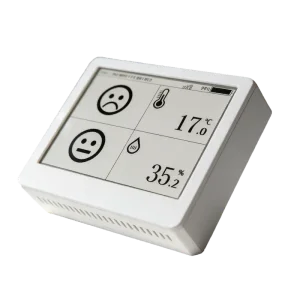
Long-range wireless transmitter for deep-penetration indoor and outdoor monitoring applications.
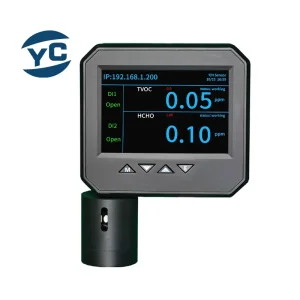
Industrial Ethernet sensor designed to track volatile compounds and formaldehyde levels in real time.
Ultra-low power wireless sensor node designed for wide-area smart agriculture and warehouse storage facilities.
Comprehensive indoor environmental logger featuring Ethernet capability and local storage configurations.
Industrial-grade gas sensor and microclimatic monitor designed for harsh chemical processing zones.
Enterprise-grade air quality logger designed for smart building automation systems and HVAC control loops.
Get answers to common technical queries about deploying, calibrating, and integrating our PoE and WiFi sensor hardware.
PoE (Power over Ethernet) sensors deliver power and data over a single network cable, eliminating the need for battery replacements. This is crucial for hard-to-reach locations like ceiling plenums, containment aisles, and remote substations. In contrast, wireless sensors require battery replacements, which increases maintenance costs and can lead to data gaps if a battery fails unexpectedly.
Our sensors utilize high-grade Swiss Sensirion and German chipsets, which feature a low drift profile (less than 0.03°C per year under normal operating conditions). For standard deployments in office buildings and warehouses, calibration is recommended every 2 years. In cleanrooms, labs, or harsh chemical environments, we recommend annual calibration to maintain absolute compliance.
Yes. Devices like our APEM-5930G feature built-in non-volatile storage flash memory. If the connection to the server is lost, the sensor logs data locally at defined intervals. Once network connectivity is restored, the logged data is backfilled to the central database, preventing any data loss.
Yes. Our hardware supports standard protocols, including SNMP (v1, v2c, and v3) and Modbus TCP/IP. This allows them to integrate easily with network monitoring tools like PRTG, Nagios, and Zabbix, as well as industrial SCADA software and Building Management Systems (BMS).
We provide full hardware customisation, including logo printing, custom casing colors, and specialized probe lengths (1m to 10m). On the firmware side, we can pre-configure IP addresses, integrate custom JSON payload formats for specific cloud systems, and adjust telemetry polling rates to meet your requirements.
 YCLH Sensor