Custom Modbus Vs BACnet Temperature Sensor Manufacturer & Suppliers

Architectural-grade, industrial reliability engineered for seamless environmental monitoring. Unleash custom configurations across Modbus RTU, Modbus TCP, BACnet MS/TP, and BACnet/IP ecosystems.

Featured Environmental Monitoring Gateways

Industrial-grade temperature, humidity, atmospheric pressure, and multi-gas smart sensors utilizing imported high-precision chipsets for rock-solid stability.
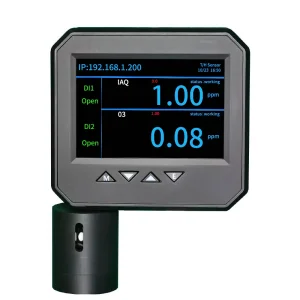
APEM-5930G Ethernet Indoor Air Quality & Ozone Logger

APEM-5930G Ethernet Indoor Air Quality & Ozone Logger

Comprehensive multi-parameter sensor tracking TVOC, Ozone, temperature and humidity with dual POE support.

View Specifications
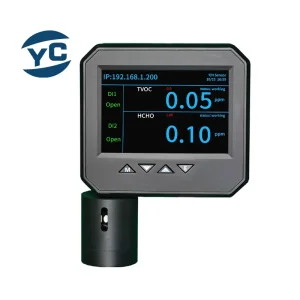
APEM-5930G TVOC & HCHO Ethernet Sensor

Custom China APEM-5930G TVOC & HCHO Ethernet Data Logger

Precise formaldehyde and TVOC logging capability with integrated relative humidity and ambient temperature probes.

View Specifications
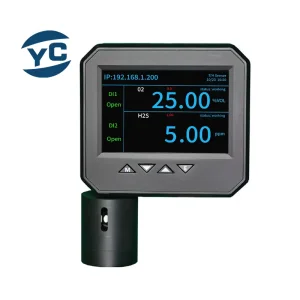
APEM-5930G Ethernet Data Logger for O2, H2S

Industrial-Grade APEM-5930G Ethernet Data Logger for O₂, H₂S

Designed for harsh environments, monitoring critical atmospheric conditions, oxygen levels, and toxic H₂S gas.

View Specifications
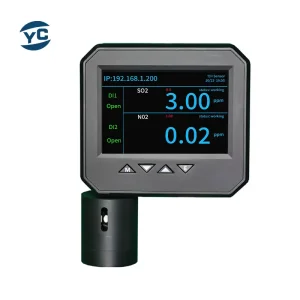
APEM-5930G SO2 & NO2 Sensor

Custom APEM-5930G Sensor: Temperature, Humidity, SO₂ & NO₂

Accurate industrial safety warning systems monitoring sulfur dioxide, nitrogen dioxide, and core thermal metrics.

View Specifications
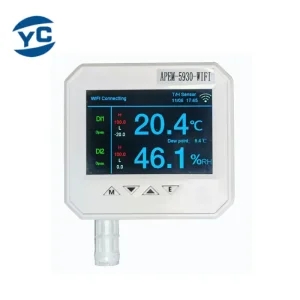
OEM Ethernet Temperature Humidity Sensor

OEM APEM-5930W Ethernet Temperature Humidity Sensor

Dual-mode WiFi & wired Ethernet connectivity ensures uninterrupted data streaming and backup redundancy.

View Specifications
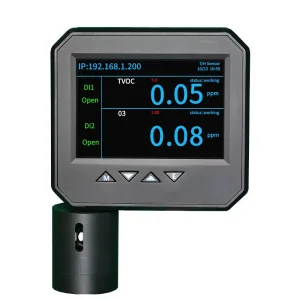
Wholesale APEM-5930G TVOC and O3 Sensor

Wholesale APEM-5930G TVOC and O₃ Ethernet Sensor

Perfect for air purification systems, validating ozone and volatile organic compound degradation indices.

View Specifications
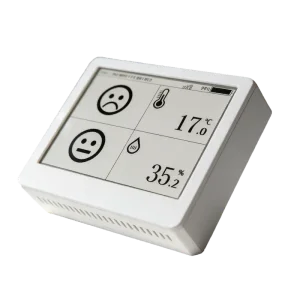
APEM-5736 LORA Sensor

Custom APEM-5736 LORA Temperature and Humidity Sensor

Long-range wireless automation profile ideal for smart agricultural grids and massive warehouse setups.

View Specifications
APEM-5930P Ethernet Sensor

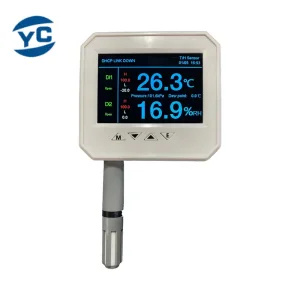
Custom APEM-5930P Ethernet Sensor (Dew Point & Pressure)

Ultra-accurate, multiparameter measurement containing barometric pressure, dew point, and basic ambient metrics.

View Specifications

Architectural Showdown: Modbus vs. BACnet in Smart Facilities

An in-depth guide on physical layer protocols, data structure framing, integration costs, and performance scaling for automation engineers.

Selecting the optimal transmission protocol for climate control, equipment automation, and safety parameters can make or break the life cycle cost of smart building and industrial control networks. The industry's continuous evolution highlights two prominent protocols for digital hardware integrations: Modbus and BACnet. To deliver exceptional E-E-A-T value and address semantic intent, we explore these core differences from an electrical engineering and operational point of view.

1. Modbus Protocols: Lean, Deterministic and Hardware-Agnostic

Created originally in 1979 by Modicon (now Schneider Electric), Modbus stands as a cornerstone of industrial networking. It uses simple register structures. Devices are queried via Master-Slave (or Client-Server on Ethernet networks) configurations. This polling mechanism is completely deterministic. It is exceptionally reliable for critical equipment where data states must be known down to the millisecond without transmission overhead.

  • Data Packaging: Data is mapped directly to 16-bit registers (coils, discrete inputs, input registers, and holding registers). There are no metadata headers specifying context, units, or names.
  • Overhead: Extremely small packet size. Perfect for high-speed transmission across thin serial networks (RS-485 Modbus RTU) or IP channels (Modbus TCP).
  • Commissioning: Requires manual registers layout configuration worksheets. The integrator must meticulously configure addresses, register lists, and data scales.

2. BACnet Protocols: Object-Oriented, Self-Documenting and Standardized

Developed under ASHRAE (American Society of Heating, Refrigerating and Air-Conditioning Engineers) guidelines, BACnet (Building Automation and Control networks) was purpose-built to solve interoperability across building management systems (BMS). Using BACnet MS/TP (serial Master-Slave/Token-Passing) or BACnet/IP, systems speak a unified, rich language designed specifically for HVAC and facilities.

  • Data Packaging: Fully object-oriented. Variables exist inside containers (Analog Input, Binary Output, etc.) complete with properties like Object_Name, Present_Value, Units, and Status_Flags.
  • Discovery: Devices support self-documentation. Standard commands like "Who-Is" and "I-Am" automatically map the field bus layout to the BMS client software.
  • Reliability & Change of Value (COV): Supports event-driven transmission. Sensors only announce updates upon change of value, vastly reducing data traffic on wide-area loops.
Parameter Details Modbus (RTU / TCP) BACnet (MS/TP / IP)
Target Application Industrial PLCs, Power Meters, Heavy Manufacturing, Raw Transducers HVAC systems, Complex Air Handling, Smart Lighting, Full BMS Loops
Data Schema Model Flat Registers (holding, coils, 16-bit hex layout) Structured Objects (analog inputs, property lists, status flags)
Network Autodiscovery None (Manual register map validation mandatory) Dynamic device discovery supported ("Who-Is", "Who-Has")
Bandwidth Utilization Extremely Low (Raw, efficient byte transmission) Moderate to High (Verbose object-property overhead)
Data Push Methods Continuous master-initiated active polling cycles Change of Value (COV) event subscriptions, reducing traffic
Integration Speed Fast implementation for experienced firmware coders Plug-and-play profile pairing via standard BMS software

Information Gain: Hybrid Architectures and the Rise of IoT Gateways

Modern smart buildings are moving away from restrictive single-protocol choices. By designing dual-stack and multiprotocol systems, Beijing Yingchuanglihe enables companies to deploy sensors configured for Modbus on local loops while using BACnet edge controllers for high-level BMS mapping. This architecture provides the cost-effectiveness of Modbus hardware alongside the high-level interoperability of BACnet.

Our Capability Metrics

Beijing Yingchuanglihe Electronic Technology Co., Ltd. has delivered precision environmental telemetry since 2007, backing your applications with certified reliability.

18+
Years Industry Experience
1500+
Modern Workshop (m²)
5+
Automated Production Lines
100+
Dedicated Professionals

Localized Application Scenarios: Where Protocol Performance Matters Most

Choosing between Modbus and BACnet isn't just about software; it determines how sensors operate under physical constraints within localized installations:

A. High-Density Computing Facilities & Data Centers

In high-density server environments, rapid ambient changes can quickly create hotspots, putting server racks at risk of failure. In these facilities, Modbus TCP sensors, such as the APEM-5930P, are deployed to provide high-speed polling across Ethernet backplanes. Integrating pressure monitoring helps track air velocity beneath raised access floors, ensuring optimized containment and cooling efficiency.

B. Cleanroom Environments & Pharmaceutical Labs

Pharmaceutical labs require strict control of negative differential pressure, chemical off-gassing, and ambient humidity. Multi-parameter gas telemetry devices (like the APEM-5930G-TVOC-O₃) utilize BACnet protocols to seamlessly integrate into cleanroom BMS networks. With built-in Change of Value (COV) messaging, safety controllers receive immediate alerts the moment oxygen or organic pollutants exceed critical thresholds.

C. Infrastructure Networks & Smart Wells

Municipal water monitoring, wastewater systems, and remote roadway vaults require long-distance, low-power telemetry. Yingchuanglihe's APEM-5736 LORA Wireless Temperature and Humidity Sensor solves this by bridging long-range LoRaWAN telemetry back into Modbus RTU master controllers at localized pump stations. This allows municipal operators to monitor deep underground vaults without routing expensive physical cables.

Our Custom Engineering Core
  • Imported Swiss & German Chips: Utilizing Sensirion elements for temperature and Bosch components for pressure, achieving long-term drift stability and exceptional accuracy.
  • Flexible Power & Signal: Standard DC12~48V coupled with active Power over Ethernet (PoE 802.3af) reduces wiring runs and simplifies field installation.
  • Customizable Cable Assemblies: Offering standard 1m to 3m extended probe cables (expandable upon request) to isolate primary network boxes from high-temperature and harsh-chemical zones.
  • Compliant Shielding: Rugged, dust-sealed, and water-resistant protective encasements ensure uninterrupted operation under heavy EMI and industrial noise environments.
The Strategic Tech Roadmap

Environmental data tracking is transitioning from simple sensor logging to cloud-based predictive intelligence. Our technical roadmap prepares your systems for future requirements:

  • BACnet Secure Connect (BACnet/SC): Deploying encrypted communication channels to safeguard smart facilities from security vulnerabilities at the physical layer.
  • Edge-based AI Analytics: Integrating microprocessors that calculate localized trends, such as predictive condensation risk using real-time dew point offsets.
  • MQTT & REST API Bridging: Dual-stack setups that communicate via Modbus/BACnet on local building automation loops, while simultaneously pushing data to IT cloud platforms.
  • Beidou Precision Integration: Expanding municipal sensor lines with high-precision structural deformation trackers and pipeline protection technologies.

Our Milestone Timeline

Since 2007, Beijing Yingchuanglihe has pioneered robust data communication, high-speed rail integrations, smart city systems, and custom environmental monitoring solutions.

2007
Inception & Platform Launch: Developed our first generation of intelligent environmental monitoring terminals based on TCP/IP protocols, accompanied by our initial environmental database software.
2009
High-Speed Rail Deployments: Partnered with Switzerland's COMLAB to develop the TH-5869 protective Ethernet series, successfully deployed along major transportation lines (Beijing-Kowloon, Beijing-Shanghai, and Wuhan-Guangzhou).
2012
Foxconn Standards Implementation: Standardized industrial electronics production workshop monitoring, establishing our sensors as a benchmark for high-reliability manufacturing environments.
2015
Baidu Yangquan Data Center Partnership: Co-developed and deployed the APEM-5900 intelligent network telemetry gateway, optimizing cooling and temperature management at Baidu's hyper-scale computing facility.
2019
Outdoor Transportation Infrastructure: Successfully deployed monitoring systems for smart highway tollways and roadside electronics integration alongside Huawei and China Merchants Huaruan.
2021 - 2023
Autonomous Road Testing & Edge Gateways: Supplied durable sensor nodes for high-level autonomous vehicle testing sites and provided edge gateway components for intelligent computing facilities.
2024
Beidou High-Precision & Municipal Water Partnerships: Established joint business divisions with Beijing Enterprises Water Group and co-founded a Beidou business division with BUCEA, focusing on high-accuracy deformation tracking.

Supply Chain Resilience: Decoupling Risk with Chinese Manufacturing Depth

Global supply chain disruptions have highlighted the risk of relying on single-source sensor assemblies. Based in Beijing, China, Yingchuanglihe offers unmatched supply chain resilience, combining raw material access, precision manufacturing, and rapid prototyping capabilities.

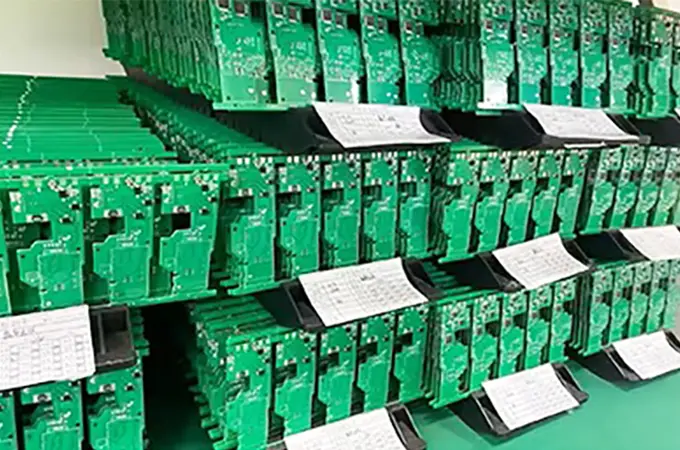
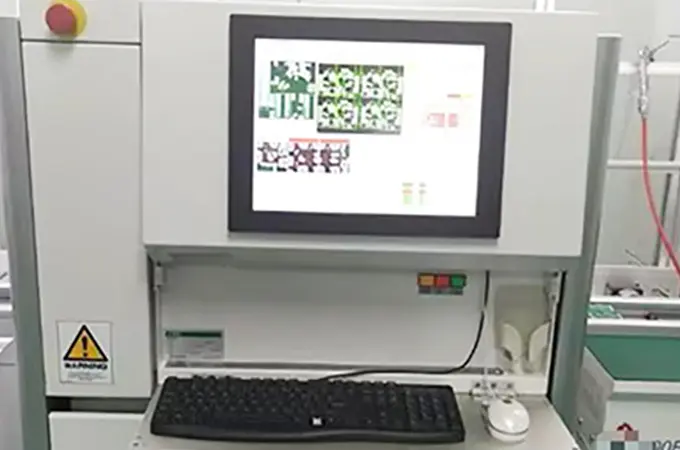
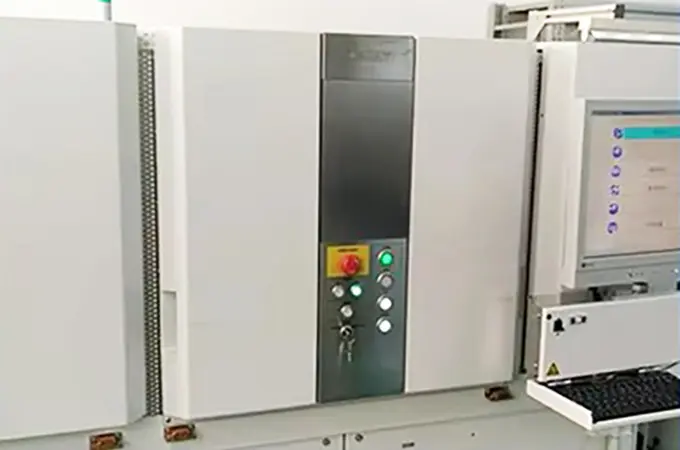
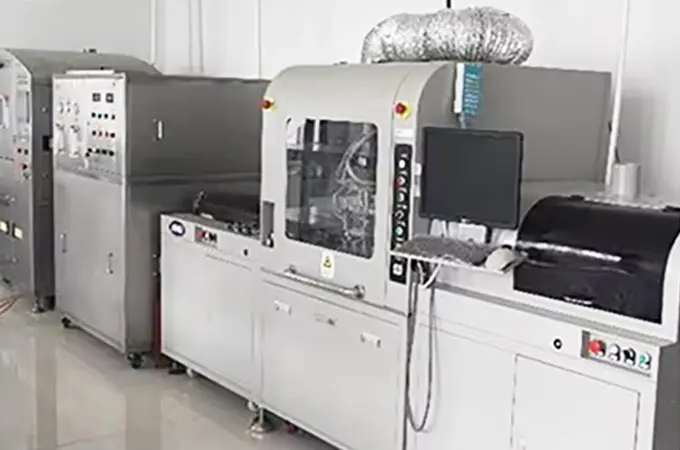
By keeping circuit assembly, calibration, firmware testing, and hardware assembly within our 1500+ m² facility, we prevent typical bottlenecks. This localized model allows us to easily support quick custom requests, run rigorous quality checks on every unit, and provide short, reliable lead times across our entire product line.

Verified E-E-A-T Quality Assurance Metrics:

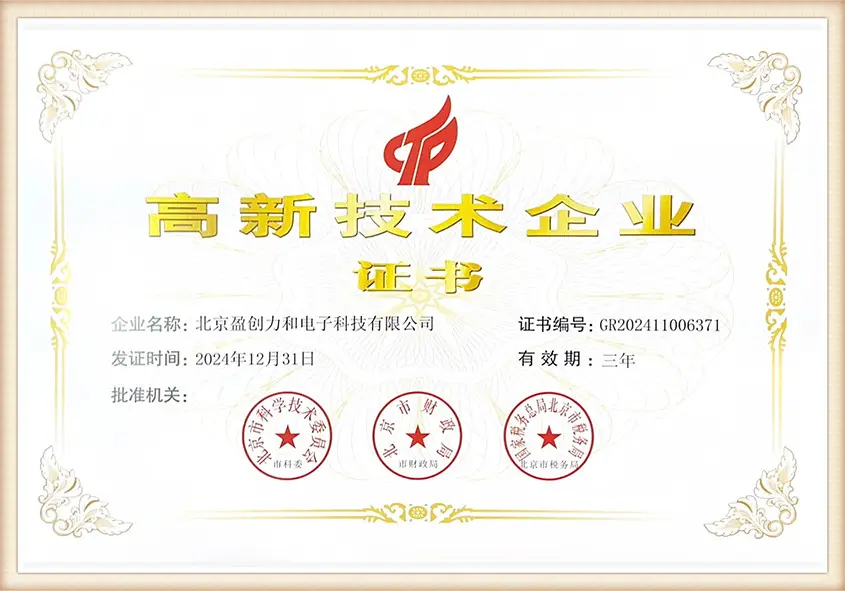
Our commitment to reliable performance is backed by global standardizations. Our operations are fully compliant with ISO9001 quality management standards, and our products carry full CE, FCC, and RoHS certifications. This ensures compliance with international import standards and guarantees seamless integration into global smart city projects.
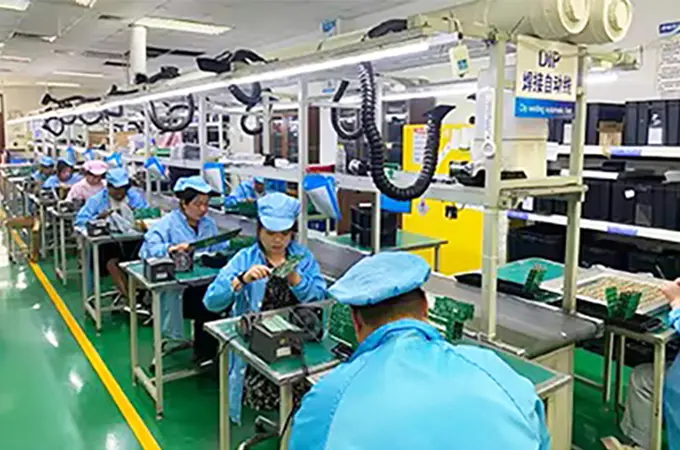
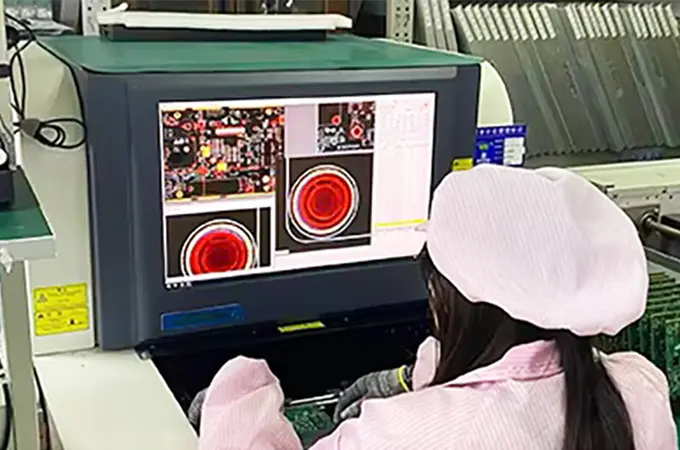
Manufacturing Quality & Industry Presence

Frequently Asked Technical Questions

Answering common questions from system integrators regarding protocol conversion, custom sensor configuration, and network performance.

Can you configure a single physical sensor to output both Modbus and BACnet?
Yes. By utilizing our dual-stack architecture or custom firmware, certain sensor platforms can dynamically output Modbus RTU packets over serial lines while supporting optional BACnet MSTP, or translate data on the Ethernet controller for BACnet/IP and Modbus TCP. This dual capability makes these sensors perfect for legacy upgrades where standard devices are gradually transitioning to modernized, object-oriented software networks.
What are the main benefits of using extended probe cables for these sensors?
Our extended probe models, such as the APEM-5930E, separate the sensitive evaluation probe from the main communication and power housing using an extension cable (typically 1 to 3 meters). This design isolates the electronic circuit board and network ports from extreme heat, moisture, or chemical corrosive gases. This ensures long-term system stability while keeping the interface easily accessible for diagnostics and maintenance.
How does Power over Ethernet (PoE) benefit industrial environmental monitoring?
PoE (IEEE 802.3af standard) allows our sensors to receive stable low-voltage DC power and transmit high-speed data through a single standard RJ45 cable. This design eliminates the need for localized AC outlets or separate power runs, reducing installation costs. It also makes it easier to deploy centralized backup power solutions (UPS) to keep the sensors operating during main power failures.
What level of calibration accuracy can these sensors achieve for temperature and relative humidity?
By using high-precision Swiss-imported sensor chips, our systems achieve standard temperature accuracy of ±0.3°C (with options up to ±0.1°C for laboratory-grade cleanrooms) and relative humidity accuracy of ±3% RH. Each batch goes through multi-point temperature and humidity chamber calibration in our Beijing factory before shipment, ensuring reliable accuracy with minimal annual drift.

Explore Our Complete Sensor Catalog

Complete your facility's monitoring network with our versatile range of multi-parameter, Ethernet, and long-range wireless sensor nodes.

APEM-5736 LORA Temperature and Humidity Sensor Supplier

Custom APEM-5736 LORA Temperature and Humidity Sensor Supplier

High-efficiency, long-range wireless sensor nodes. Perfect for monitoring vast commercial facilities and agricultural environments.

View Specifications
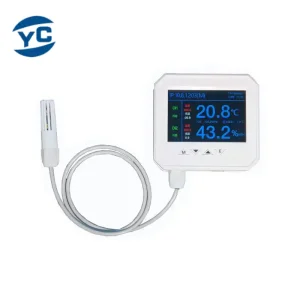
China APEM-5930E Ethernet Temperature Humidity Sensor Probes

China APEM-5930E Ethernet Temperature Humidity Sensor Probes

Features optional custom probe lengths. Designed to isolate measuring components from high-temperature and harsh industrial environments.

View Specifications
CE Certification APEM-5930G Ethernet Multi-Parameter Sensor

CE Certification APEM-5930G Ethernet Multi-Parameter Sensor

Fully compliant, integrated multi-sensor measuring TVOC, Ozone, temperature, and relative humidity for high-level safety assurance.

View Specifications
Wholesale APEM-5930G Ethernet Multi-Parameter Sensor

Wholesale APEM-5930G Ethernet Multi-Parameter Sensor - TVOC, O₃

Industrial-grade multi-parameter monitoring gateway providing real-time air quality metrics over standard Ethernet connections.

View Specifications
Custom APEM-5930P Ethernet Temperature Humidity Pressure Sensor

Custom APEM-5930P Ethernet Temperature Humidity Pressure Sensor

Incorporates high-precision barometric pressure tracking. Ideal for monitoring HVAC systems and differential pressure cleanrooms.

View Specifications
Custom APEM-5930P Ethernet Sensor

Custom APEM-5930P Ethernet Sensor: Temperature, Humidity, Pressure

Designed for high-reliability applications, providing complete atmospheric data across industrial automation backbones.

View Specifications
Custom APEM-5930G TVOC & Formaldehyde Data Logger

Custom APEM-5930G TVOC & Formaldehyde Data Logger

Real-time detection of chemical off-gassing, volatile organic compounds, and indoor thermal metrics with integrated data logging.

View Specifications
Custom APEM-5736 LORA Temperature and Humidity Sensor

Custom APEM-5736 LORA Temperature and Humidity Sensor

High-performance wireless monitoring featuring long battery life and outstanding signal penetration through commercial obstacles.

View Specifications