Integrate our CE/RoHS-certified multi-parameter ethernet and RS485 solutions designed for next-generation automated tracking.
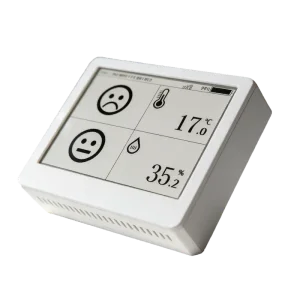
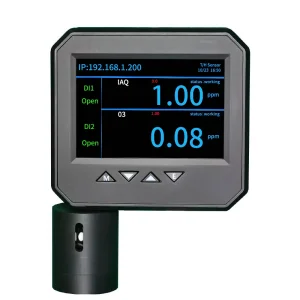
Analyzing critical sensor evolution, signal architecture, and global industrial IoT application landscapes.
In modern industrial and building automation systems, micro-environmental stability is directly tied to operational efficiency, product yield, and safety compliance. The Modbus Temperature and Humidity Sensor stands as the fundamental node of data acquisition inside this landscape. Utilized globally across high-precision facilities—including semiconductor cleanrooms, pharmaceutical warehouses, smart agricultural greenhouses, and critical telecom data centers—the Modbus communication protocol remains the undisputed standard for industrial fieldbus transmission.
Globally, the integration of Modbus RTU (over RS-485) and Modbus TCP/IP (over Ethernet/PoE) is expanding rapidly. The industrial sensor market is transitioning from simple analog transmitters (like 4-20mA or 0-10V loops) toward intelligent, addressable digital nodes. Digital registers enable central programmable logic controllers (PLCs), distributed control systems (DCS), and supervisory control and data acquisition (SCADA) platforms to retrieve not just current measurements, but also internal diagnostic variables, calibration histories, and sensor status indicators. This capabilities-driven transition minimizes manual overrides, reduces overall wiring complexity, and establishes solid support for predictive maintenance frameworks.
China, as the world's leading industrial manufacturing hub, hosts a sophisticated sensor ecosystem. Key factories, such as Beijing Yingchuanglihe Electronic Technology Co., Ltd., have pushed technical boundaries by combining Swiss-designed and German-manufactured sensing elements with robust local engineering, firmware optimization, and cost-effective scaling. This approach delivers exceptionally low temperature coefficients, drift-free performance, and extended operational lifespans at a fraction of standard international costs.
A trusted manufacturer delivering high-reliability environmental monitoring units worldwide.
Established in 2007, Beijing Yingchuanglihe Electronic Technology Co., Ltd. has established a formidable presence in the environmental monitoring industry. Located in Beijing, China, our modern manufacturing facility spans over 1,500 square meters and employs over 100 highly skilled professionals.
We focus on developing and supplying a comprehensive range of temperature, humidity, dew point, atmospheric pressure, and multi-parameter gas sensors. These solutions offer the precise, real-time data support required to manage smart environmental systems across major global markets.
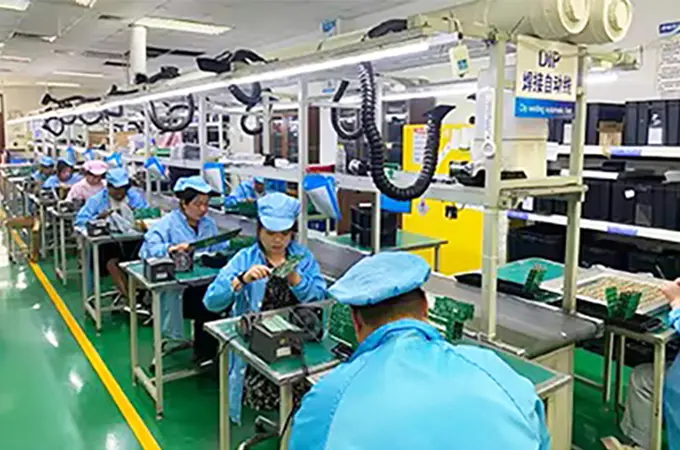
Leveraging deep technical expertise, robust supply chains, and customer-first support systems.
We integrate imported high-precision sensor chips, guaranteeing ultra-low drift, high reliability, and excellent resistance to chemical contamination.
From physical housing customizations and board layouts to proprietary firmware modifications and specialized register maps, we cater to all requirements.
Our product lines support multiple connectivity architectures including Modbus RTU, Modbus TCP/IP, LoRaWAN, SNMP, and wireless WiFi configurations.
Products are fully certified with CE, FCC, and RoHS, making them immediately eligible for deployment in European, North American, and Asian markets.
Our engineering team processes custom RFQs and technical questions with complete documentation and drawings in less than 8 hours.
From high-speed railways (Beijing-Kowloon) to smart data hubs (Baidu Yangquan), our sensors are installed in mission-critical applications.
How Yingchuanglihe Modbus sensors solve specific microclimate control challenges globally.
Data centers run continuously, generating massive heat loads that require precise temperature and humidity management to prevent server failure. Our PoE (Power over Ethernet) sensors allow operators to deploy reliable monitoring directly at the rack level. Utilizing Modbus TCP/IP, the sensors stream critical parameters directly to building management databases without requiring local power converters.
GMP compliance requires rigorous temperature and relative humidity tracking throughout drug development and storage. Any fluctuation can invalidate expensive research or ruin medical inventory. Our sensors utilize highly precise Swiss sensors, delivering absolute tracking to +/- 0.3°C and +/- 2% RH.
In partnership with Beijing Enterprises Water Group, we developed customized sensor networks that withstand high humidity, condensation, and chemical vapors in wastewater treatment plants and utility tunnels.
Collaborated with COMLAB (Switzerland) to implement specialized protective Ethernet-based sensor packages along major high-speed rail lines, operating reliably under extreme vibrations and temperature swings.
We design and supply the edge-computing road monitoring enclosures utilized throughout Beijing's autonomous driving test zones, incorporating TVOC, O3, and weather parameter feeds.
A reference architecture guide for systems engineers integrating Yingchuanglihe sensor arrays.
Our Modbus RTU sensors communicate using RS485 physical layer interfaces at standard rates (default: 9600 bps, 8 data bits, no parity, 1 stop bit). The table below represents the standard register map for our primary temperature, humidity, and dew point sensors.
| Register Address (Hex) | Register Description | Data Type | Scaling Factor | Read/Write Type |
|---|---|---|---|---|
| 0x0000 | Temperature Value (°C) | Signed 16-Bit Integer | Value / 10 (e.g., 235 = 23.5°C) | Read Only (04) |
| 0x0001 | Relative Humidity Value (% RH) | Unsigned 16-Bit Integer | Value / 10 (e.g., 452 = 45.2% RH) | Read Only (04) |
| 0x0002 | Dew Point Temp (°C) | Signed 16-Bit Integer | Value / 10 (e.g., 112 = 11.2°C) | Read Only (04) |
| 0x0100 | Device Modbus ID Address | Unsigned 16-Bit Integer | Range: 1 to 247 (Default: 1) | Read & Write (03 / 06) |
| 0x0101 | Baud Rate Configuration Code | Unsigned 16-Bit Integer | 0=2400, 1=4800, 2=9600, 3=19200 | Read & Write (03 / 06) |
How we grew from a network monitoring startup in 2007 into a modern multi-protocol sensor factory.
How the convergence of edge computing, wireless backhauls, and advanced material science is redefining environmental telemetry.
Wired RS-485 installations remain standard, but industrial facilities are increasingly adopting wireless hybrid systems. By mapping Modbus registers over LoRaWAN or NB-IoT telemetry, operators can deploy sensors across remote sections of their facilities without cable installation costs.
Yingchuanglihe is leading this shift with our APEM-5736 LoRa series, which transmits industrial-grade Modbus registers over miles while operating on battery power for up to 5 years.
Industrial processes require monitoring beyond simple temperature and humidity. Integrated arrays must track total volatile organic compounds (TVOC), ozone (O3), carbon monoxide (CO), sulfur dioxide (SO2), and formaldehyde (HCHO) simultaneously.
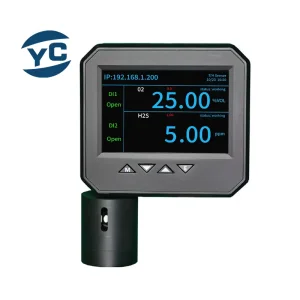
Our APEM-5930G platform consolidates these parameters into a single Ethernet device, reducing costs and providing clean data structures for industrial ventilation management.
Premium Modbus RTU / TCP & LoRaWAN sensors with Swiss elements.
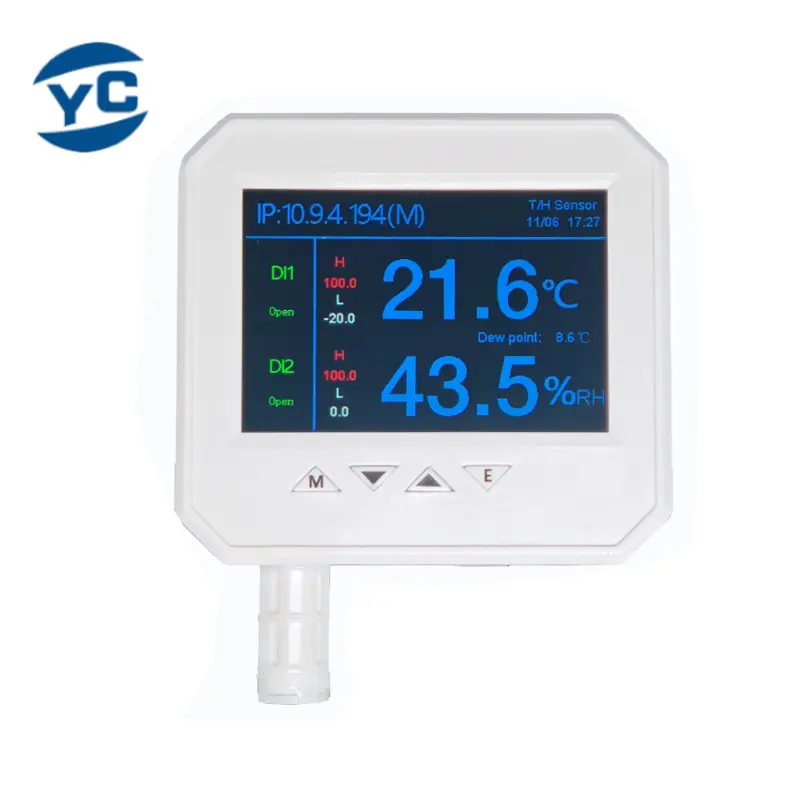
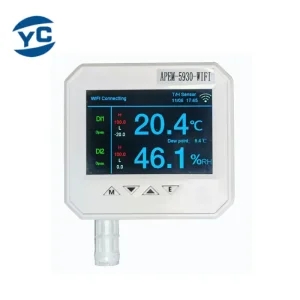
Model: APEM-5930. Features Ethernet + POE (DC12~48V) support, tracking temperature, relative humidity, and calculating dew point internally.
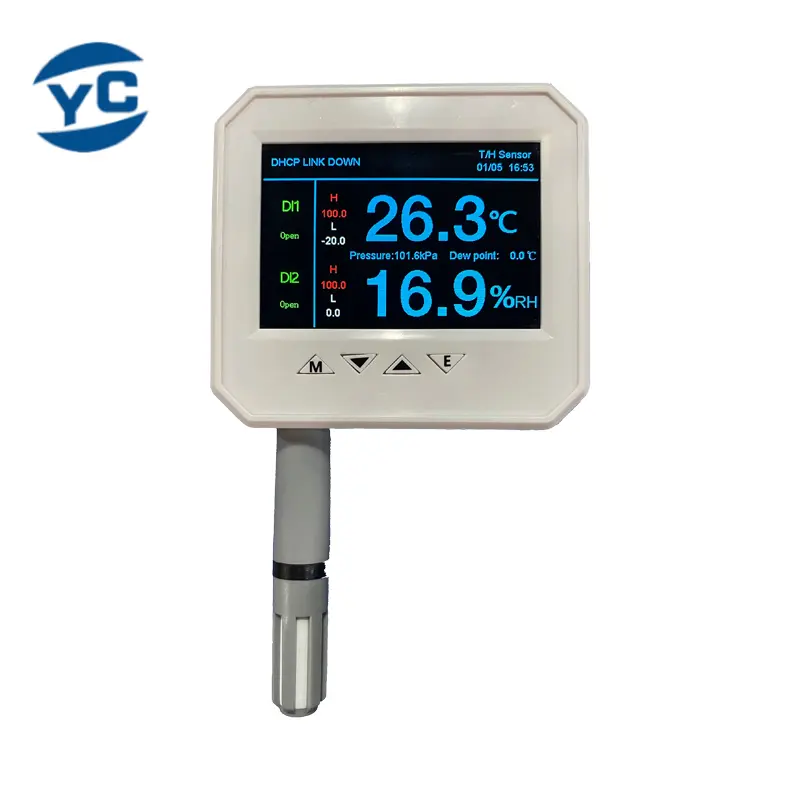
Model: APEM-5930P. Integrates an atmospheric pressure sensor to assess cleanroom air barrier efficiency alongside temperature and humidity.
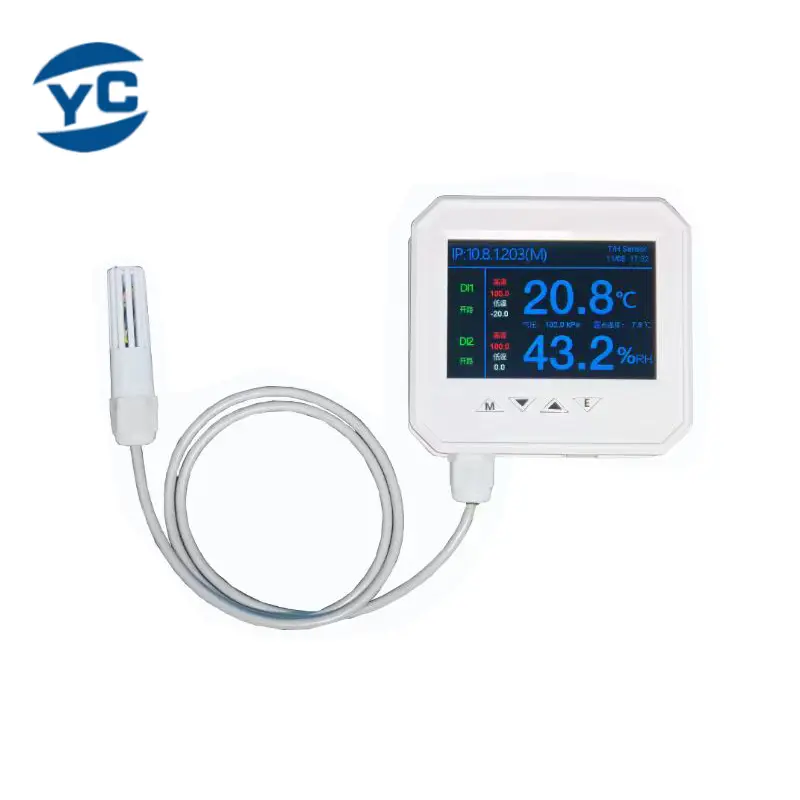
Model: APEM-5930E. Designed with an external probe separated from the core transmitter by a 1-3 meter cable, ideal for duct placement.
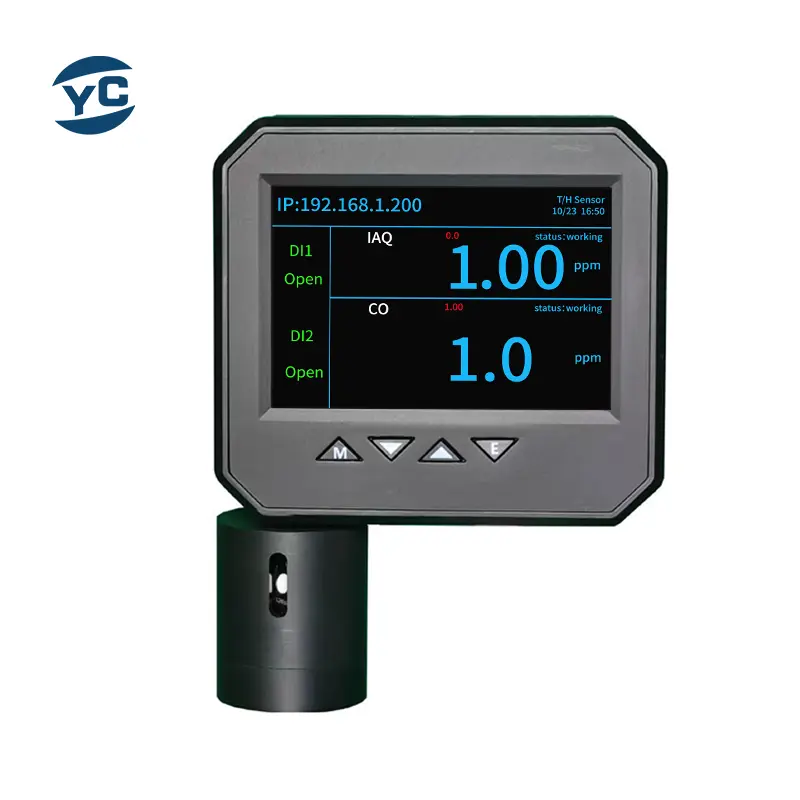
Model: APEM-5930G-IAQ-CO. An industrial-grade sensor integrating temperature, humidity, carbon monoxide (CO), and overall Indoor Air Quality indexing.
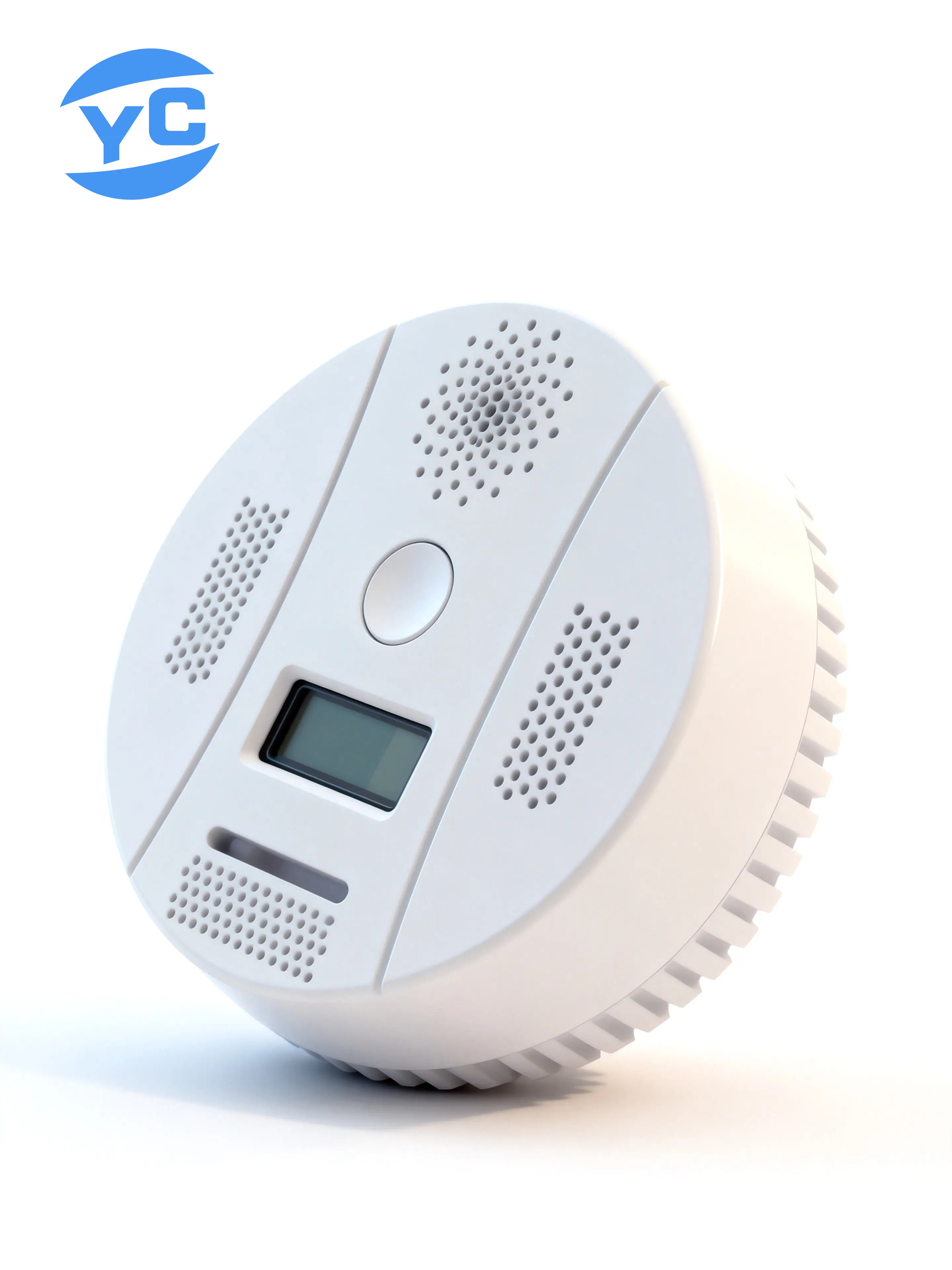
Wireless long-range smart building transmitter for corporate environments, facilitating HVAC integration.
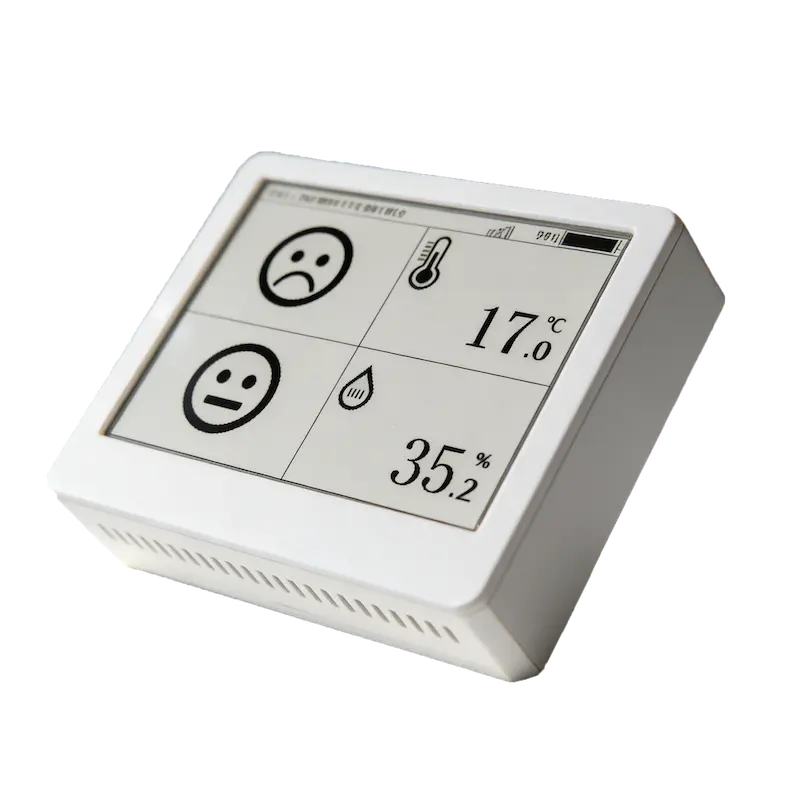
Low-power wireless module featuring long-range communication. Includes DC12~48V + POE options.
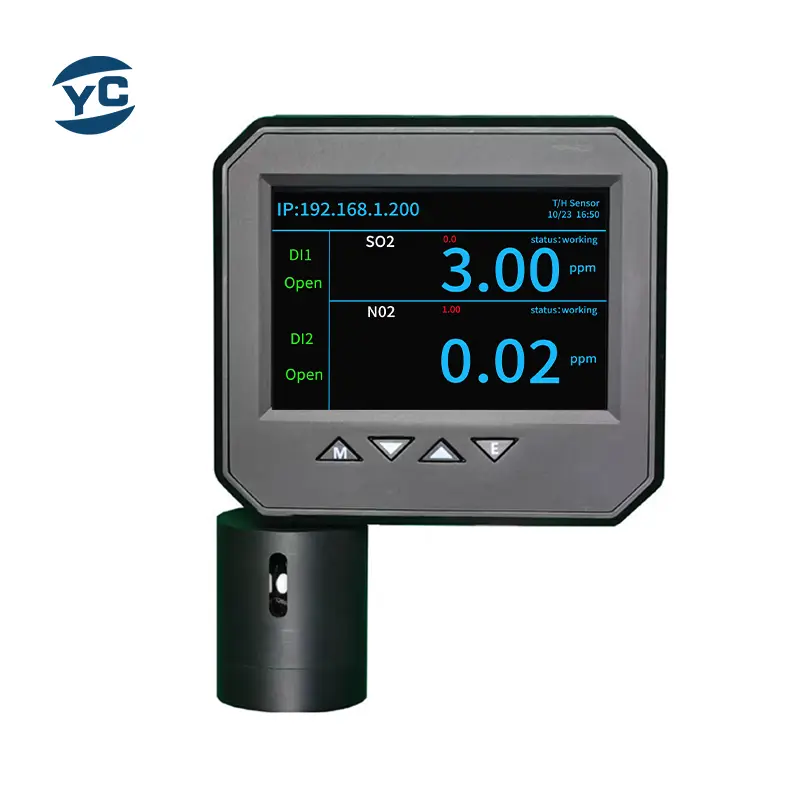
Combines industrial-grade temperature and humidity monitoring with electrochemical SO₂ and NO₂ gas detection.
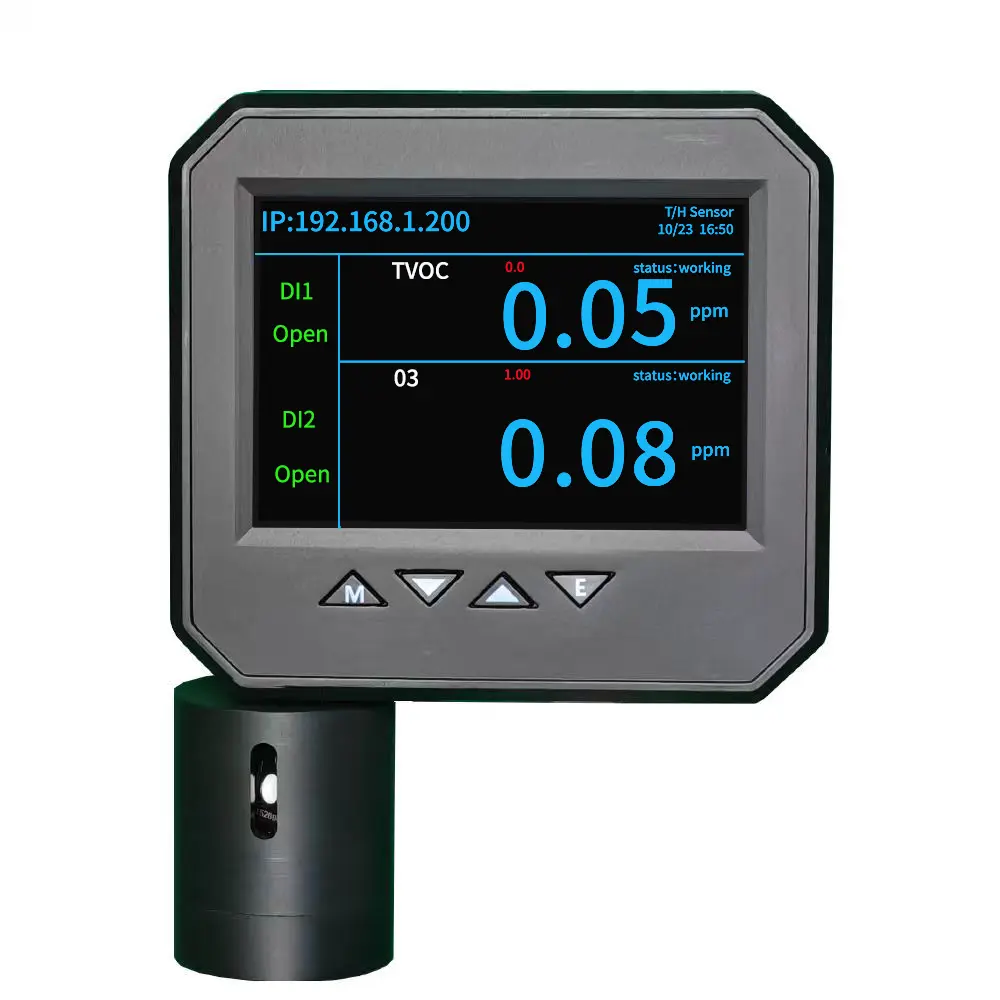
Simultaneous chemical VOC and ozone monitoring with integrated relative humidity and temperature output.
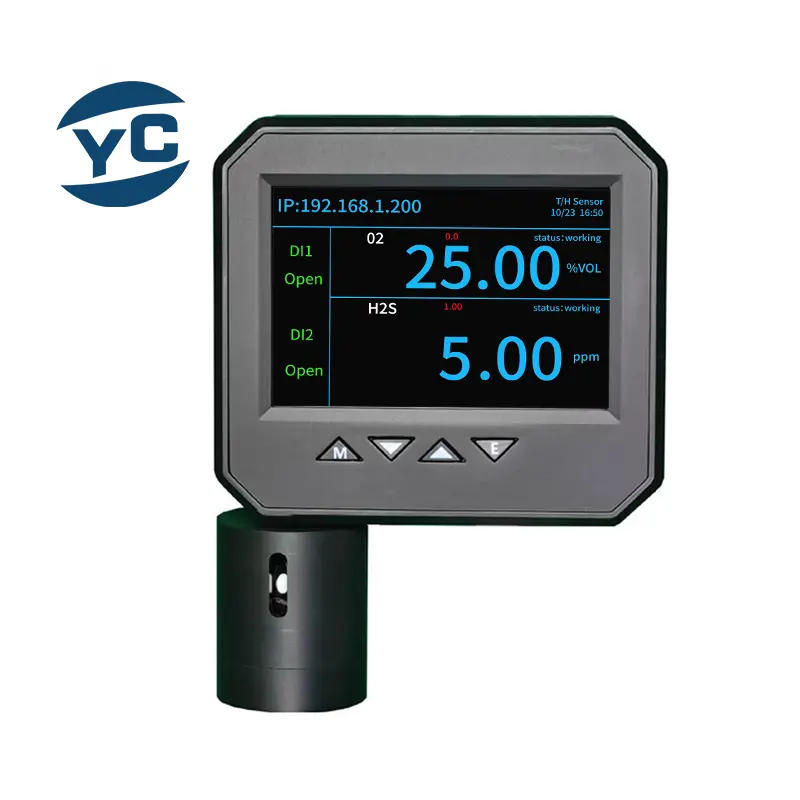
High-reliability configuration for toxic environment telemetry, featuring a built-in relay output.
Get answers to common integration, hardware selection, and protocol execution questions.
Deploy reliable environmental monitoring hardware with options tailored for various industries.
 YCLH Sensor