High-efficiency, long-range wireless and wired environmental IoT sensors engineered for integration in arid climates, industrial corridors, and smart municipal utilities.
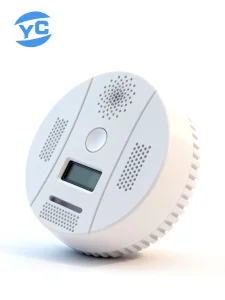
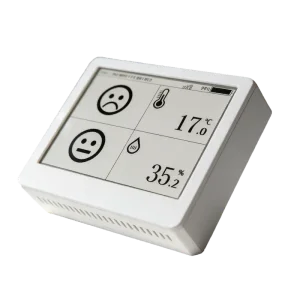
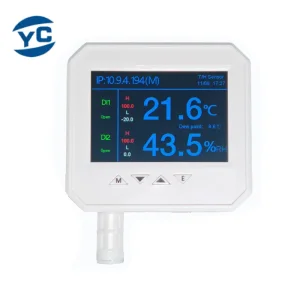
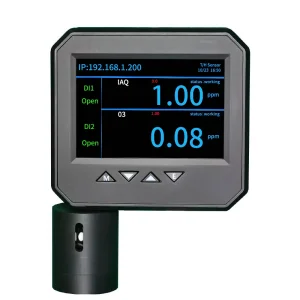
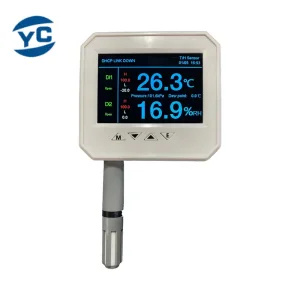
The Tashkent Smart City initiative and administrative center upgrades demand real-time building automation systems. Monitoring IAQ (Indoor Air Quality), TVOC, Ozone, and ambient parameters is critical for energy conservation and occupational safety.
In regions like the Fergana Valley and Samarkand, micro-climate monitoring in modernized automated greenhouses helps optimize water resources. LoRa sensors provide structural soil-ambient data bridges over broad acreage without costly cable runs.
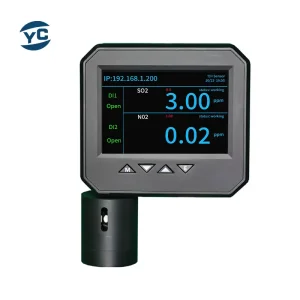
Industrial bases in Navoiy and Bukhara utilize our multi-parameter gas sensors to monitor concentrations of Sulfur Dioxide (SO₂), Nitrogen Dioxide (NO₂), and H₂S, preventing toxic buildup in processing plants.
As the Republic of Uzbekistan drives forward its "Digital Uzbekistan 2030" national strategy, industrial sectors are rapidly transitioning from legacy analog instruments to decentralized, cloud-connected sensor networks. The unique continental climate of Uzbekistan, characterized by extreme temperature deltas (ranging from above 45°C in peak summer to below -20°C in winter), places high demands on sensor stability. Heavy industrial complexes require robust, IP65-rated housings, Swiss-engineered chipsets, and long-range communication architectures that can withstand electromagnetic interference and physical weathering.
Our LoRa (Long Range) and Ethernet (PoE) series sensors serve as the foundational hardware layer for this transition. By coupling low-frequency wireless technology with robust Ethernet field buses, regional contractors can deploy multi-parameter monitoring systems across historic sites, agricultural acreage, urban centers, and remote pipelines with minimal capital expenditure.
For system integrators in Uzbekistan, selecting the optimal network interface is vital to balance installation speed, maintenance costs, and system longevity. Below, we compare the key technical routes applied to regional environmental telemetry installations:
| Feature / Metric | LoRaWAN (APEM-5616 & APEM-5736) | Ethernet / PoE (APEM-5930 Series) | Cellular / NB-IoT Systems |
|---|---|---|---|
| Deployment Range | Up to 15 km (line of sight in open steppes) | Limited to 100m per segment (expandable via switches) | Dependent on local cell tower coverage |
| Power Infrastructure | Battery operated (up to 5-year operational life) | Power-over-Ethernet (IEEE 802.3af standard) | High power consumption, requires grid/large batteries |
| Frequency Profile | EU868 / RU864 / US915 configurable channels | N/A (IEEE 802.3 Wired) | Licensed bands (requires local SIM subscription) |
| Local SCADA Compatibility | Through LoRa Gateway to Modbus TCP/MQTT API | Direct Modbus TCP, SNMP, and HTTP support | Proprietary cloud API integration |
| Typical Applications | Smart agriculture, municipal pipelines, expansive depots | Data centers, cleanrooms, industrial offices | Scattered roadside nodes, urban vehicle tracking |
Operating wireless systems in Uzbekistan requires alignment with national spectrum regulatory bodies, such as the Ministry of Digital Technologies of the Republic of Uzbekistan (Uzkomnazorat). Typically, the RU864-870 and EU863-870 bands are designated for license-free sub-GHz operations. Yingchuanglihe pre-configures all Uzbekistan-bound LoRa transceivers with localized channel masks, ensuring that our systems do not interfere with military, aviation, or commercial cellular networks while delivering maximum signal range and link margin.
Empowering enterprise growth with Swiss-grade sensory chips, 18+ years of technical breakthroughs, and automated Chinese manufacturing excellence.
We integrate premium sensory chipsets imported from Switzerland and Germany, guaranteeing drift-free, long-term stability and unmatched response times under extreme thermal shifts.
From proprietary enclosures and specialized high-IP-rated probes (IP67/68) to multi-protocol custom software integrations, our R&D team designs solutions tailored for unique site environments.
Fully certified with CE, FCC, and RoHS compliance standards. Our manufacturing base ensures that every single unit is calibrated against traceable master equipment prior to international dispatch.
Flexible integration models designed to support complex factory configurations, testing labs, and environmental control systems.
Yingchuanglihe has stood at the forefront of environmental sensor engineering since 2007. Here is our history of research, alliances, and innovation.
Company founded. Developed the first intelligent environmental monitoring terminal based on the TCP/IP network protocol. Launched initial version of environmental monitoring software.
Partnered with Mocha Software to launch the TH-5939 series SNMP-enabled environmental monitoring products, establishing strong footing in telecom sector integrations.
Collaborated with COMLAB (Switzerland) to introduce the rugged TH-5869 protective Ethernet monitor. Successfully applied across major Chinese high-speed railway projects.
In partnership with Founder Technology, launched the APEM-6100 series, pioneering the use of Power over Ethernet (PoE) in ambient sensor modules.
Formed standardizing collaborations with Foxconn, establishing our sensors as the default manufacturing floor environmental benchmarks.
Partnered with Baidu to launch next-generation APEM-5900 terminals, deployed at the Yangquan Data Center. Upgraded software architecture to support multi-parameter gas sensor grids.
Introduced full smart solutions systems, moving horizontally from data center environmental telemetry to smart city building integration platforms.
Developed and deployed integrated outdoor cabinet monitoring units alongside Huawei and China Merchants Huaruan ETC expressway projects.
Heavily involved in developing road test integrated boxes and edge computing gateways for Beijing's autonomous driving test zones.
Provided critical technical support, environmental sensors, and telemetry infrastructure for several intelligent computing data center projects.
Established new joint business divisions with Beijing Enterprises Water Group and co-founded a Beidou Business Division with BUCEA, focusing on high-precision telemetry and pipeline safety systems.
Our Beijing-based production facility operates under strict ISO 9001:2015 Quality Management Systems. Integrating advanced manufacturing lines, automated solder paste inspection, and automated optical testing ensures that every sensor module functions correctly. Our core competitive edge lies in our rigorous calibration chambers:
For international projects, particularly in Central Asia, shipping times and transport pathways require reliable packaging. All products are vacuum-sealed, packed in electrostatic-discharge shielding, and crated for transport via direct land routes (such as the Chengdu-Tashkent railway link) or express air freight, securing delivery timeframes within 7–14 business days from stock availability.
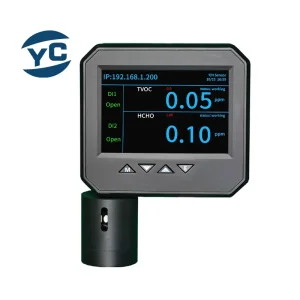
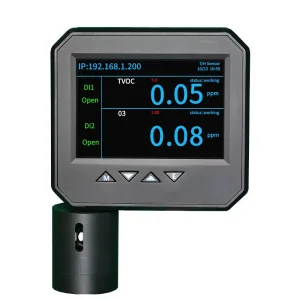
Explore our specialized sensor solutions configured for toxic gas detection, high-performance TVOC logging, and hazardous area monitoring.
One of the primary friction points when deploying imported sensors is protocol compatibility. Yingchuanglihe sensors support open industrial communication standards, ensuring seamless integration with existing software structures:
Our engineering support desk assists with connection diagrams, register maps, and localized device driver configurations, resolving integration queries within 8 hours.
Expert technical answers regarding range, calibration intervals, frequency setups, and bulk procurement logistics for Uzbekistan.
 YCLH Sensor