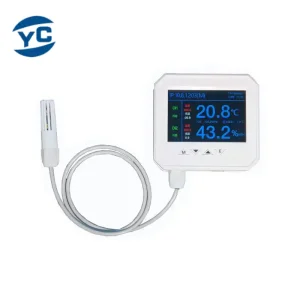
Direct manufacturer supply featuring Swiss-made digital sensing chips, Ethernet connectivity, and standard Modbus RTU interface capability.
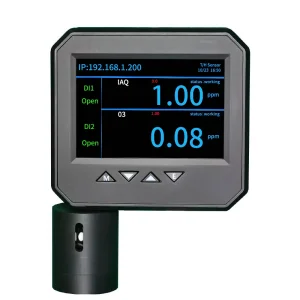
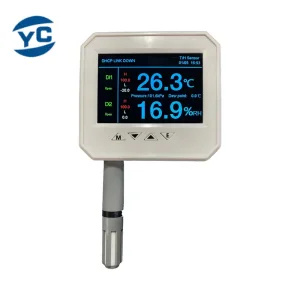
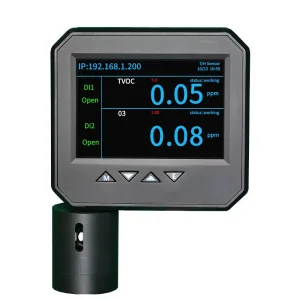
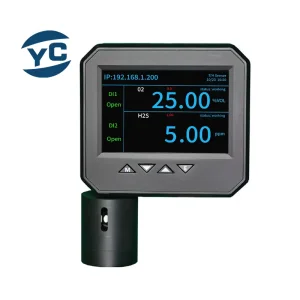
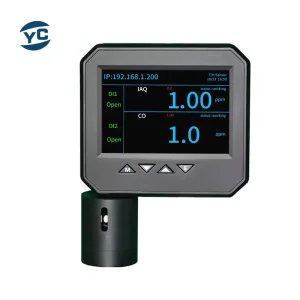
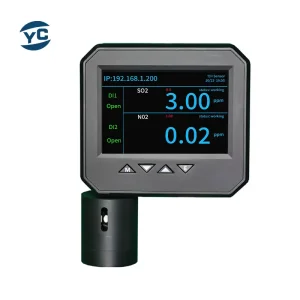
In modern industrial automation, process control, and environmental intelligence, microclimatic variations can compromise yields, invalidate pharmaceutical inventories, and trigger structural or systemic failures. For over three decades, the RS485 physical bus standard combined with the Modbus RTU protocol has remained the backbone of robust industrial control loops. As wholesale RS485 temperature and humidity sensor suppliers, we recognize that our clients require more than basic measurements. They demand robust noise immunity, galvanic isolation, long-distance signal transmission, and seamless operational reliability under severe electromagnetic interference (EMI).
Unlike single-ended communication systems, RS485 operates using two dedicated signaling wires (A and B) to transmit differential voltage. Any external ambient electromagnetic noise affects both lines equally, allowing the differential receiver to negate common-mode noise. This ensures accurate, error-free environmental reporting even when placed alongside high-power motors and variable frequency drives (VFDs).
A single RS485 master can support up to 32 standard unit-load slave transceivers on a simple two-wire daisy-chain bus. By utilizing high-impedance input receivers, our wholesale RS485 temperature and humidity transmitters can be expanded up to 128 or even 255 nodes on a single physical bus loop. This minimizes wiring complexity and lowers structural integration costs across large facilities.
Modbus RTU operates on a predictable, lightweight master-slave architecture using 16-bit register addresses. It does not require complex software driver stacks, allowing our sensors to integrate directly with PLCs (Programmable Logic Controllers), SCADA systems, industrial HMIs, RTUs, and modern edge gateways from major manufacturers without proprietary software licensing.
Yingchuanglihe's RS485 temperature and humidity transmitters feature Swiss-made digital sensing chips. Unlike analog thermal sensors (such as RTDs or thermistors) that require analog-to-digital (ADC) processing on the motherboard, these chips integrate both the capacitive polymer humidity sensor and a band-gap temperature sensor directly onto a single silicon die. This design eliminates signal attenuation along the internal circuitry, ensuring reliable measurement performance:
Founded in 2007, Beijing Yingchuanglihe Electronic Technology Co., Ltd. is a high-tech pioneer in the design, engineering, and automated production of precision environmental sensors.
Our facility features state-of-the-art climate-controlled calibration chambers, automatic SMT placement, and high-precision testing instrumentation. Every sensor undergoes continuous multi-point temperature and humidity cycle calibration to ensure linearity across the entire operating spectrum (-40°C to +85°C, 0% to 100% RH).
We specialize in customized sensor designs, offering bespoke hardware form factors, specific communication protocols (Modbus RTU, BACnet, SNMP, LoRaWAN), custom probe lengths, and specialized branding. Our engineering team provides quick turnaround on custom firmware modifications and schematic revisions.
All our industrial-grade sensors are fully certified with CE, FCC, and RoHS marks, facilitating seamless integration and compliance in international markets. Our dedicated export logistics team ensures reliable international deliveries with comprehensive packaging and transport support.
A timeline of innovation, high-speed rail deployment, and smart autonomous driving collaborations.
Company founded in Beijing; engineered our first TCP/IP intelligent monitoring terminal alongside native server-side acquisition software.
Collaborated with Mocha Software, launching our first industrial-grade SNMP protocol-supported environmental device series (TH-5939).
Partnered with Switzerland's COMLAB to develop the TH-5869 protective Ethernet series, deployed on high-speed rail lines including the Beijing-Kowloon and Wuhan-Guangzhou express routes.
In partnership with Founder Technology, released the APEM-6100 series, pioneering the use of Power-over-Ethernet (PoE) in industrial climate sensors.
Collaborated with Foxconn to establish our sensors as standard instrumentation within modern cleanroom manufacturing environments.
Cooperated with Baidu to deploy the APEM-5900 network acquisition system in Baidu's Yangquan Data Center, ensuring high-reliability cooling efficiency.
Launched cabinet monitoring systems deployed across major Huawei hardware systems and China Merchants Huaruan smart toll lanes.
Selected to co-develop road test edge-computing boxes and autonomous driving sensor cabinets in Beijing's High-Level Autonomous Driving Zone.
Formed divisions with Beijing Enterprises Water Group and co-founded the Beidou High-Precision Deformation Monitoring alliance with BUCEA, while obtaining our IDC license.
Environmental parameters are critical across various modern industrial sectors. Accurate relative humidity and temperature data protect structural assets, maintain strict medical product stability, and optimize agricultural yields. Below are key scenarios where our wholesale RS485 and Ethernet sensors are deployed globally.
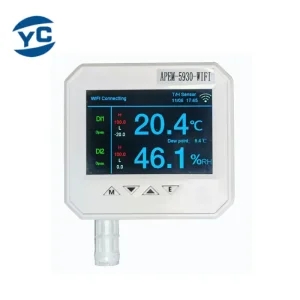
In high-density server halls and modern AI computing centers, cooling represents a significant operational cost. ASHRAE guidelines require close monitoring of server intake air to prevent electrostatic buildup (low humidity) or condensation and corrosion (high humidity). Deploying our RS485 transmitters or the PoE-powered APEM-5930 sensor at the cabinet level enables real-time hot/cold aisle thermal mapping. System integrators can feed this data directly into automated cooling loops, improving Power Usage Effectiveness (PUE) and protecting sensitive hardware.
Vaccines, biological therapies, and modern medicines are highly sensitive to thermal fluctuations. To comply with FDA and EMA regulations, storage facilities require validated monitoring networks. Our RS485 temperature and humidity transmitters feature high-accuracy Swiss digital chips, providing reliable logging for audits. Optional dual-redundant models offer integrated physical alarms and on-board memory to prevent data gaps during power or network outages.
Managing Vapor Pressure Deficit (VPD) is key to maximizing crop transpiration and nutrient intake in high-yield smart agricultural facilities. Standard sensors often corrode in humid, pesticide-treated greenhouse environments. Our specialized agricultural sensor probes feature IP65-rated enclosures and sintered metal filter tips, protecting the inner sensing element from misting systems, dust, and chemical residues while maintaining accurate readings.
Microchip lithography and high-precision laboratory procedures require exceptionally stable ambient environments. Even small changes in humidity can alter the chemical curing rates of photoresists and affect precision optics. Our high-resolution APEM-5930P series monitors both microclimatic shifts and differential atmospheric pressure. This helps maintain cleanroom positive pressure, preventing contamination from external corridors.
At Yingchuanglihe, we align our engineering and manufacturing processes with the highest industry standards to deliver reliable sensing solutions. Our quality management framework ensures long-term field accuracy and performance:
Every transmitter undergoes automated multi-point thermal and humidity calibration using reference devices traceable to international standards. This process generates precise correction coefficients stored directly in the sensor's EEPROM, eliminating the need for manual offset adjustments in the field.
To protect communication networks from electrical surges, our industrial RS485 interfaces feature galvanic isolation and TVS transient protection. This design insulates the delicate microprocessor from ground loop currents, high-voltage spikes, and lightning discharges up to 15kV ESD.
Our sensors are fully certified with CE, FCC, and RoHS marks, complying with global standards for electrical safety, electromagnetic compatibility, and hazardous material restrictions. This facilitates smooth integration and deployment in major international markets.
To support system developers, our RS485 and Modbus RTU sensors use standard registers. This allows for straightforward, direct integration with various control systems:
| Register Hex Address | Parameter | Data Format | Scale Factor | Description |
|---|---|---|---|---|
0x0001 |
Temperature | Signed 16-bit Integer | 0.1 °C | E.g., 0x00FA translates to 25.0 °C. Supports negative temperatures (two's complement). |
0x0002 |
Relative Humidity | Unsigned 16-bit Integer | 0.1 % RH | E.g., 0x0258 translates to 60.0% Relative Humidity. Range: 0 - 1000. |
0x0003 |
Dew Point | Signed 16-bit Integer | 0.1 °C | Calculated in real-time from ambient temperature and relative humidity. |
0x0004 |
Atmospheric Pressure | Unsigned 32-bit Integer | 0.1 hPa | Available on specialized multi-parameter models (e.g., APEM-5930P). |
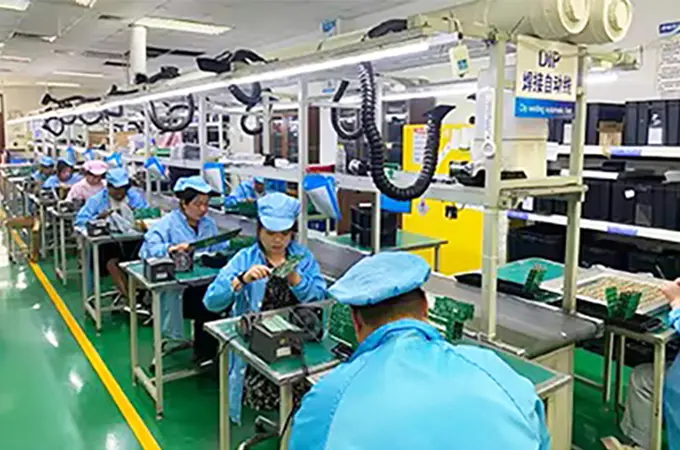
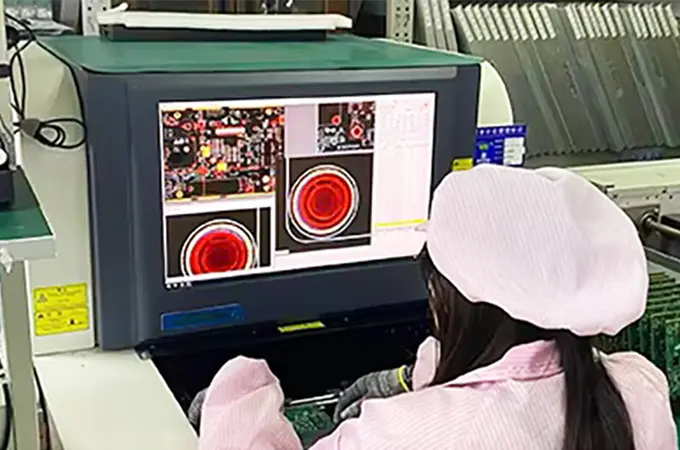
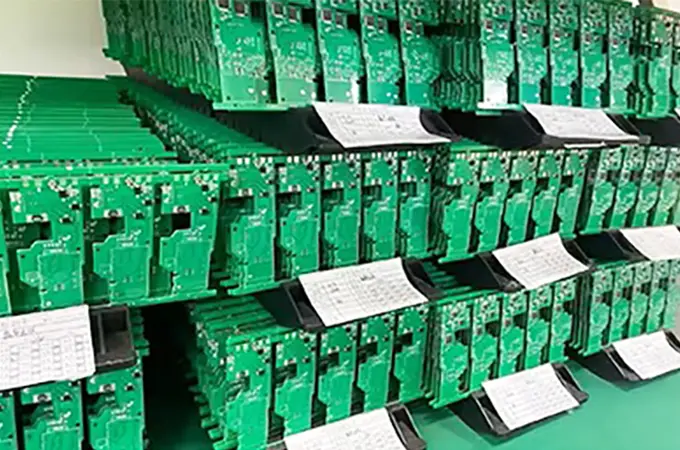
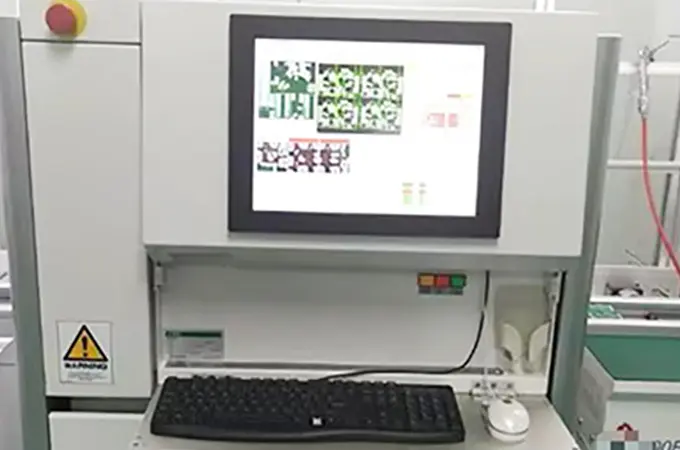
A look inside our 1500+ m² facility, advanced manufacturing operations, and global industry exhibitions.
As industrial automation evolves, environmental sensing is transitioning from reactive data acquisition to proactive, edge-managed optimization. At Yingchuanglihe, our R&D initiatives focus on three primary technical advancements:
Future iterations of our RS485 and Ethernet sensors will do more than stream raw environmental data. By integrating ARM® Cortex®-M class microprocessors, next-generation sensors will feature built-in anomaly detection. These devices can identify sensor drift, calculate risk profiles for mold and corrosion, and trigger localized alarms directly over the RS485 bus, reducing reliance on central PLC polling cycles.
Modern factories often use a mix of legacy and modern networks. Our future products will expand on dual-protocol frameworks, like our Wi-Fi/Wired APEM-5930W. We are developing compact transmitters that bridge RS485 Modbus networks with low-power wireless protocols (such as LoRaWAN and Beidou satellite networks) and Ethernet architectures (MQTT and BACnet/IP), enabling seamless communication across multi-generational industrial plants.
Building on our APEM-5930G multi-parameter series, which integrates CO, TVOC, O3, H2S, and SO2, we are expanding our environmental monitoring solutions. Our focus is on combining precise temperature and relative humidity sensing with miniaturized optical gas sensing elements (NDIR and photoionization), creating comprehensive, single-point indoor air quality and hazard warning units.
Technical insights, configuration advice, and troubleshooting tips for instrumentation engineers and system integrators.
Engineered for cleanroom validation, industrial HVAC systems, smart agriculture, and precision IoT architectures.
 YCLH Sensor