Browse our leading portfolio of high-precision environmental sensors, fully customizable with multi-parameter capabilities for data centers, industrial operations, and smart buildings.
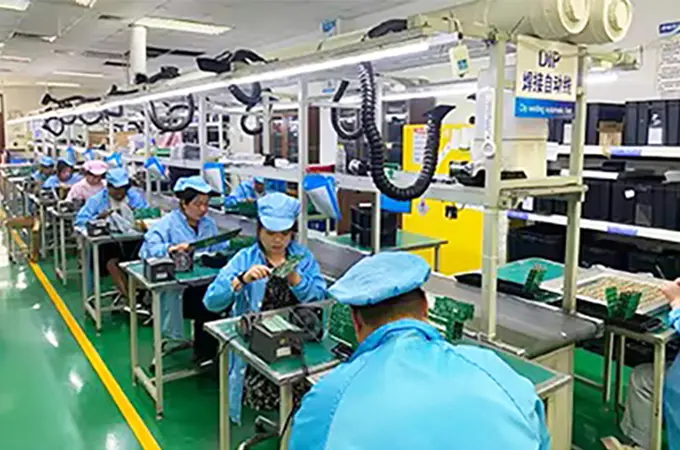
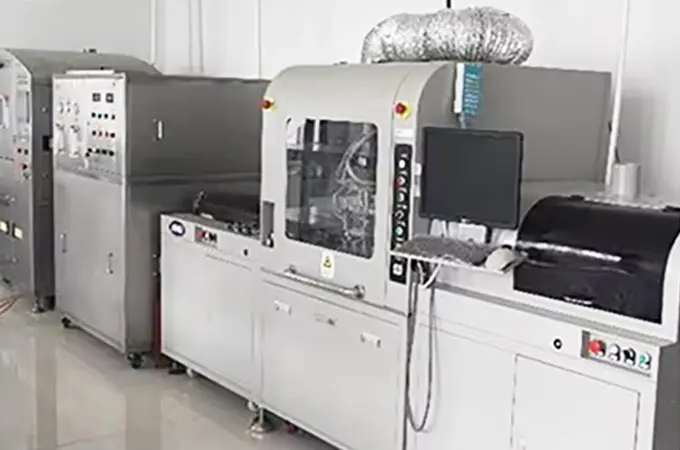
Beijing Yingchuanglihe Electronic Technology Co., Ltd. is a leading global professional manufacturer of environmental monitoring sensors. Since our foundation in 2007, we have committed ourselves to delivering highly stable, reliable multi-parameter and temperature-humidity monitoring instruments designed for complex industrial settings. Operating out of Beijing, our ISO-certified production facility spans over 1,500 square meters and utilizes five advanced automated production lines operated by over 100 skilled specialists. We provide the vital data foundation required to support contemporary intelligent environments globally.
Our engineering philosophy integrates Swiss and German high-performance core chips (e.g., Sensirion, Bosch) within customized RF architectures to guarantee long-term stability and unmatched measurement fidelity. This ensures that every LoRaWAN, PoE, Wi-Fi, and RS485 instrument complies with international regulatory protocols including CE, FCC, and RoHS, offering straightforward system integration for large-scale enterprise rollouts.
As enterprises globally optimize their assets through low-power wide-area networks (LPWAN), the structural demands of the LoRaWAN Sensor Datasheet have shifted significantly. Modern procurement agents no longer look for simple range statistics; instead, they require deep technical characteristics outlining real-world parameters. Our engineering teams have analyzed these shifting paradigms to optimize our hardware designs for next-generation IoT architectures.
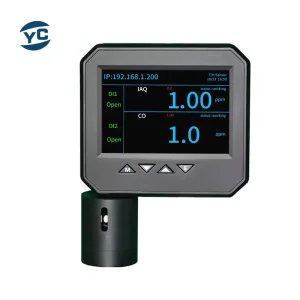
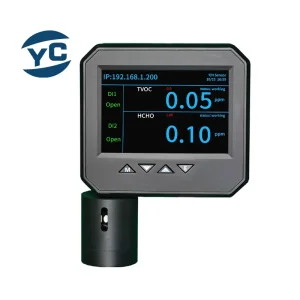
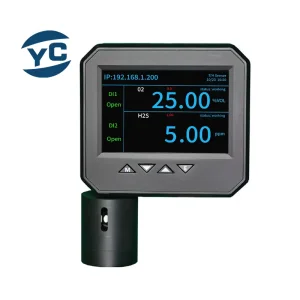
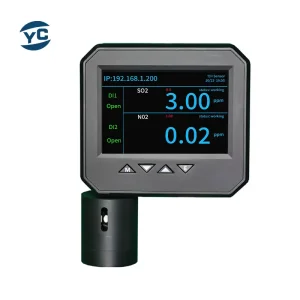
Legacy LPWAN architectures required separate sensors for CO₂, TVOC, temperature, and atmospheric pressure. Our custom designs, such as the APEM-5930G series, merge multiple gas sensors (O₂, H₂S, SO₂, NO₂) alongside high-accuracy temperature and humidity metrics into one unified datasheet profile, reducing node installation and maintenance costs.
Enterprise buyers require comprehensive battery consumption curves relative to Spreading Factors (SF7 to SF12) and transmit power levels (e.g., +14 dBm to +22 dBm). Our datasheets specify the micro-ampere draw in deep sleep modes (<30µA) to ensure realistic 5-to-10-year field operations using standard Li-SOCl₂ batteries.
To simplify complex cloud integration with AWS IoT Core, ChirpStack, or The Things Network (TTN), modern datasheets must include standard payload formats (such as Cayenne LPP). We supply pre-written JavaScript decoders alongside our hardware to ensure rapid sensor onboarding.
When sourcing industrial-grade LoRaWAN nodes or PoE gateways, global procurement managers utilize rigorous criteria to ensure operational resilience in environments ranging from data centers to high-elevation autonomous driving road test stations. Below is our benchmarked specification matrix highlighting our custom sensor engineering capabilities:
| Specification Parameter | Standard Industrial Requirement | Yingchuanglihe Custom Capability |
|---|---|---|
| Core Sensor Technology | Standard solid-state or electrochemical sensors | Imported Swiss & German high-precision, long-term stability chips |
| Multi-Interface Networking | Single connectivity (only LoRa or only Ethernet) | Dual-mode support (Wired PoE + Wi-Fi back-up, and direct LoRaWAN) |
| Power Configuration | Standard batteries or external AC adapters | PoE (DC12-48V IEEE 802.3af) and ultra-low power batteries (5-10 year life) |
| Enclosure and Ruggedization | IP30 indoor structural casing | IP65 to IP68 weather-resistant enclosures with customized extendable external probes |
| Regulatory Compliance | Localized regional standard alignment | Full CE, FCC, RoHS certifications with support for worldwide LoRaWAN frequency bands |
Industrial environmental monitoring is not a one-size-fits-all domain. Different sectors demand unique topologies and protocols to maintain system-wide safety and performance. Our deployments range from indoor cleanrooms to rugged autonomous driving road infrastructure.
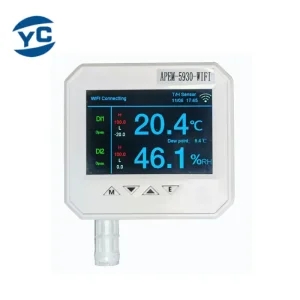
Data centers utilize our PoE and Wi-Fi dual-network sensors (like the APEM-5930W) to monitor thermal and humidity gradients across server aisles. Our real-time data integration with automated cooling systems helps prevent micro-condensation and reduces cooling energy overhead.
Project Example: In 2015, we deployed our next-generation intelligent environmental terminals in partnership with Baidu at their high-density Yangquan Data Center, ensuring optimal thermal boundaries.
LoRaWAN's deep signal penetration is ideal for sub-surface municipal monitoring. Combining our long-battery-life sensors with rugged external water-leakage detection probes allows city operators to pinpoint leaks and monitor pressure changes without regular maintenance cycles.
Project Example: In 2024, we formed joint business divisions with Beijing Enterprises Water Group, applying high-precision telemetry systems to long-distance smart pipeline systems.
Modern autonomous driving relies on edge compute gateways deployed along highways. Outdoor cabinets house delicate computing servers that must be monitored for dust, TVOC, humidity, and atmospheric pressure to prevent early hardware degradation.
Project Example: In 2021, we engineered the road test integrated boxes and edge computing gateways used in Beijing's high-level autonomous driving corridors.
At Yingchuanglihe, we recognize that off-the-shelf sensors cannot meet every industrial requirement. We offer complete OEM and ODM customization services backed by our 18+ years of environmental measurement expertise. Whether you require customized firmware, alternate RF band configuration, or specific multi-gas sensor arrays, our engineers will support your project from concept to final certification.
Our support team guarantees that all customer technical inquiries are responded to within 8 hours, offering a smooth integration process for your development teams.
Founded in Beijing. Developed our first intelligent environmental monitoring terminal utilizing TCP/IP protocols alongside our core monitoring software platform.
Partnered with Mocha Software to launch the TH-5939 series of environmental monitoring products supporting standard SNMP network management protocols.
Collaborated with Switzerland's COMLAB to design the TH-5869 protective Ethernet environmental monitor, deployed across high-speed rail lines including the Beijing-Kowloon and Beijing-Shanghai railways.
Cooperated with Founder Technology to launch the APEM-6100, one of the earliest industrial environmental monitors to implement Power over Ethernet (PoE) technologies.
Established a long-term supply relationship with Foxconn, solidifying our sensors as a benchmark standard for environment tracking in high-tech production facilities.
Released the next-generation APEM-5900 intelligent terminal in collaboration with Baidu for their Yangquan Data Center, and updated our environmental software to support multi-parameter system topologies.
Introduced our integrated smart solutions suite, implementing multi-scenario projects starting with data centers and extending horizontally into other industrial sectors.
Launched the outdoor integrated cabinet monitoring system, deployed in Huawei and China Merchants Huaruan ETC expressway projects.
Deeply engaged in the research, design, and manufacturing of integrated road-test cabinets and edge computing gateways for Beijing's autonomous driving test roads.
Supported the construction of large-scale intelligent computing centers, supplying key environmental monitoring hardware for core computing infrastructure.
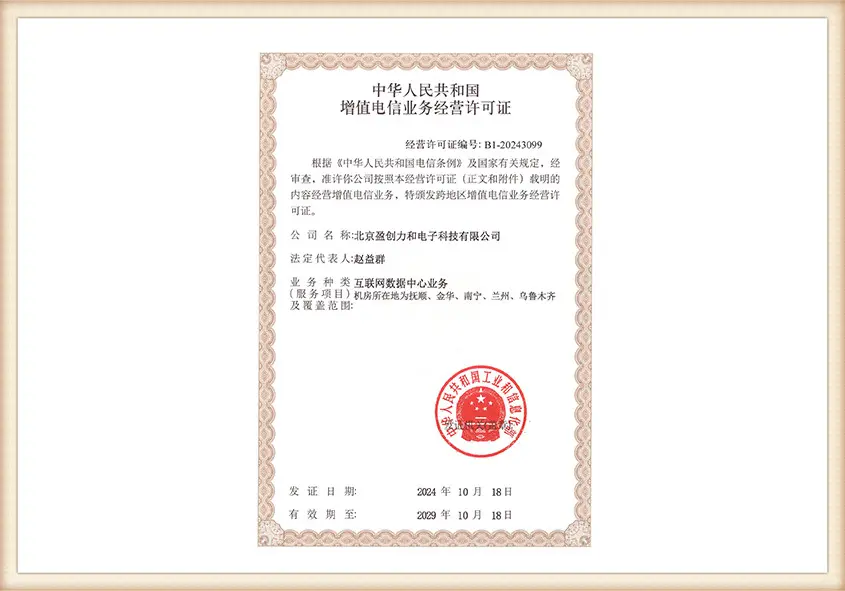
Established joint business divisions with Beijing Enterprises Water Group, co-founded a Beidou division with BUCEA for high-precision deformation monitoring, and secured our official Internet Data Center (IDC) business license.
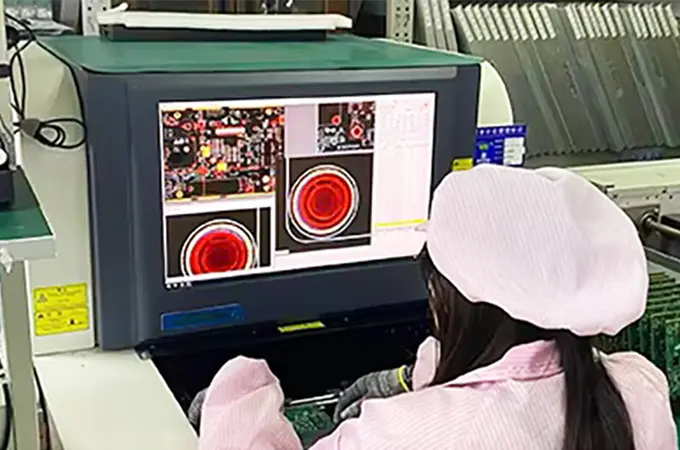
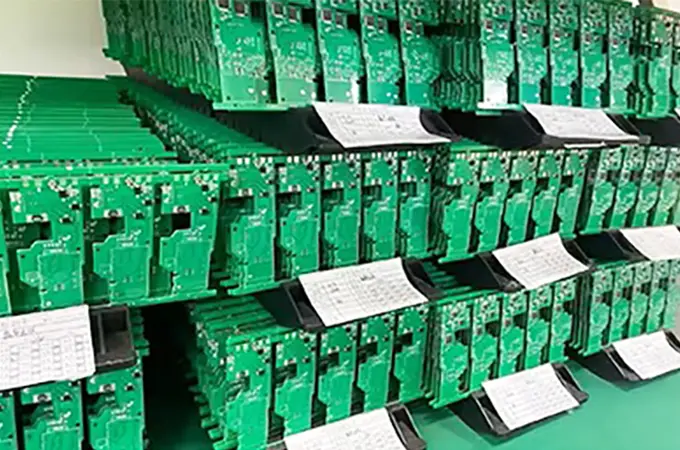
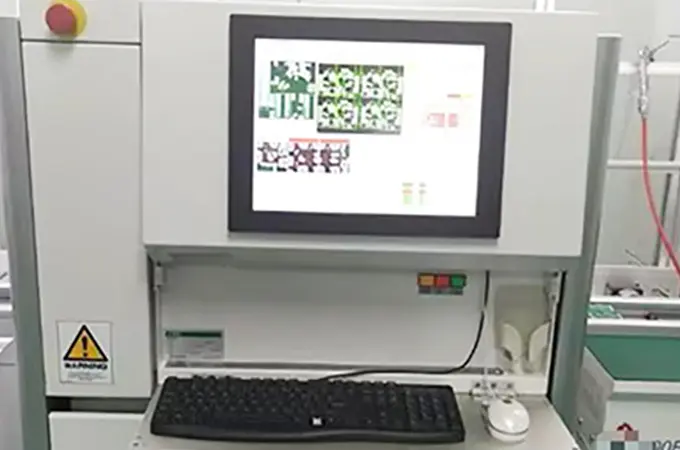
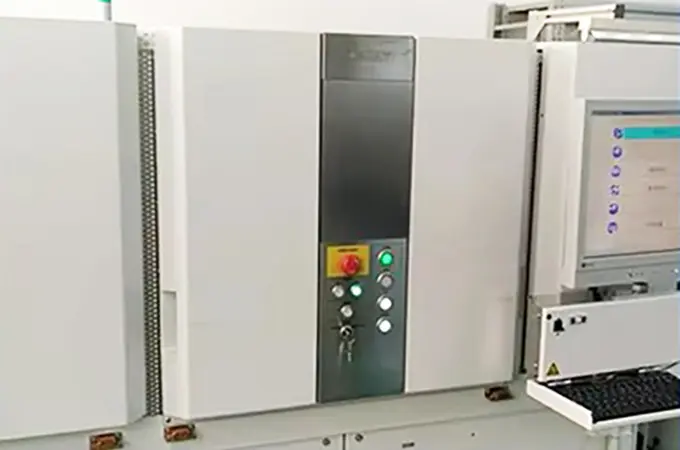
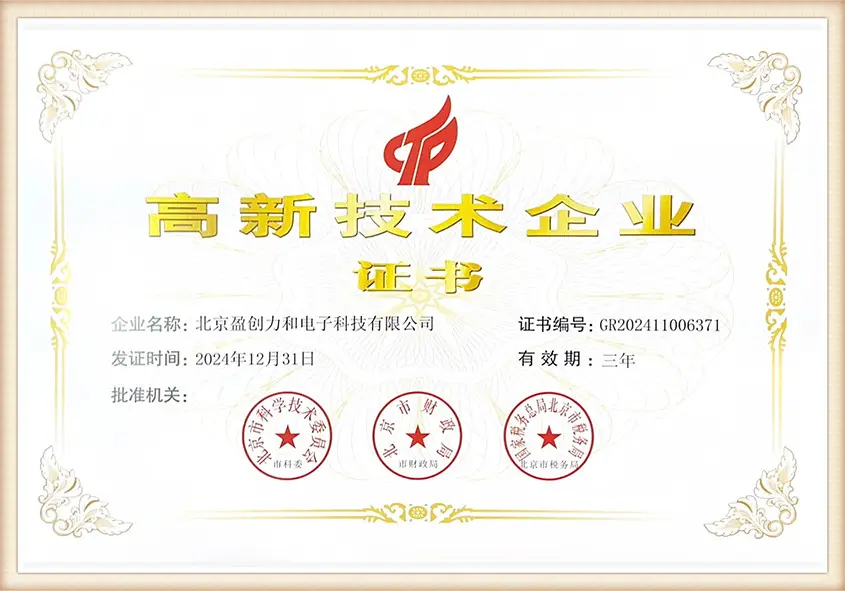
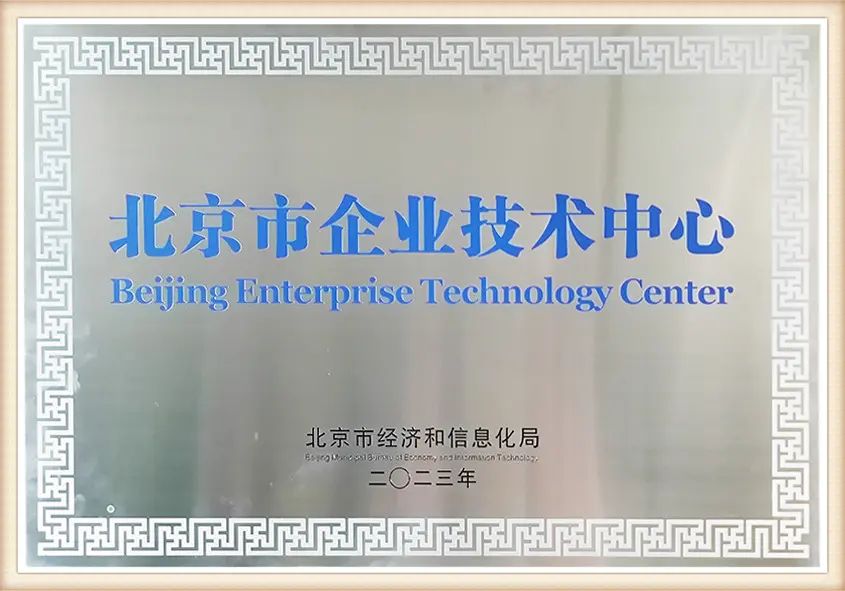
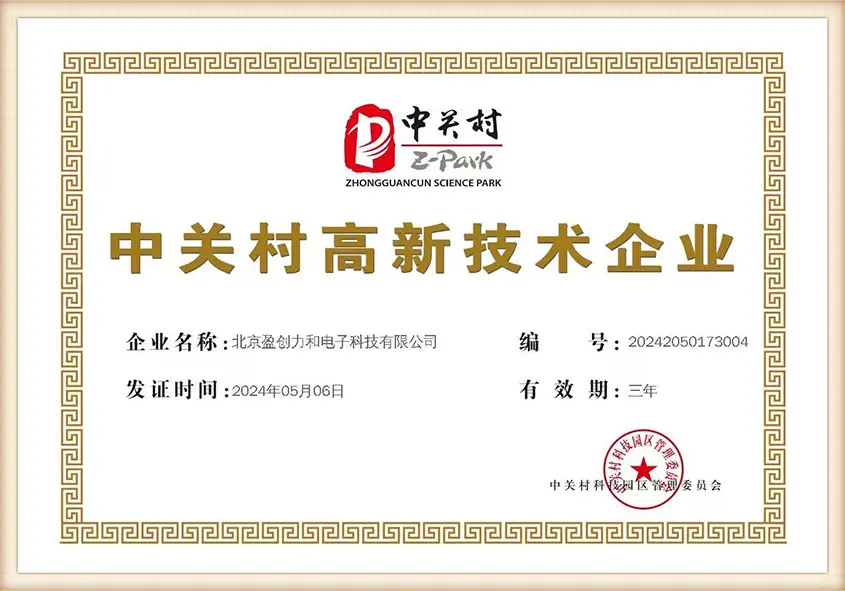
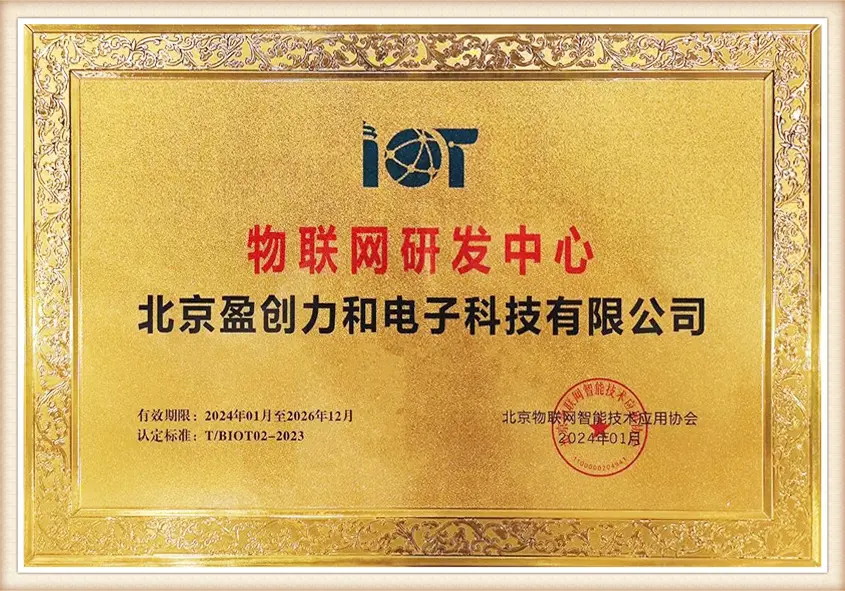
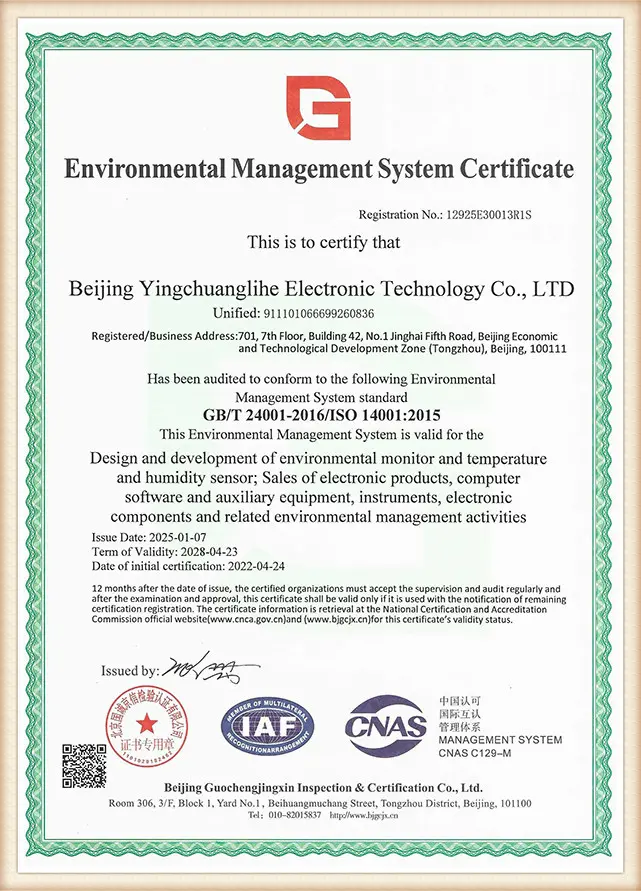
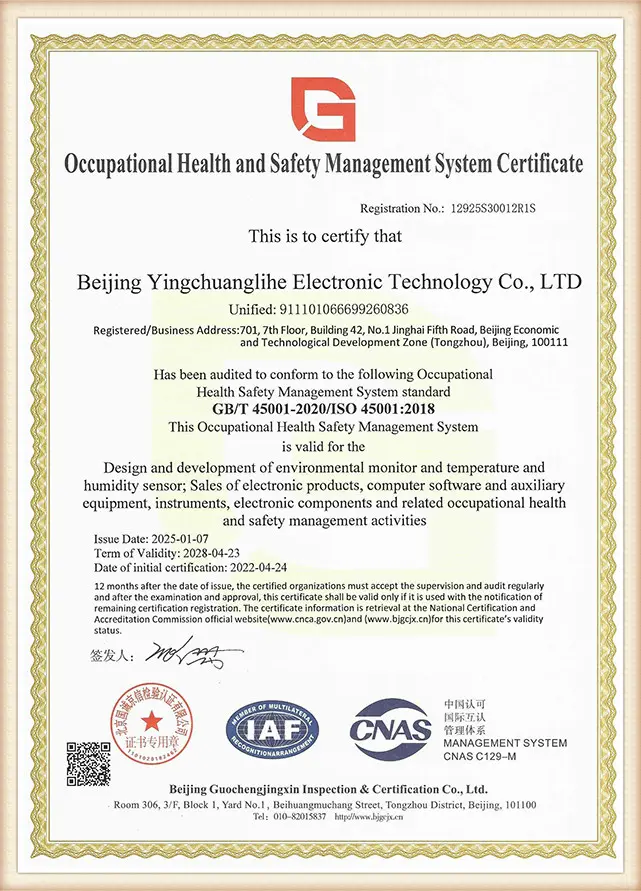
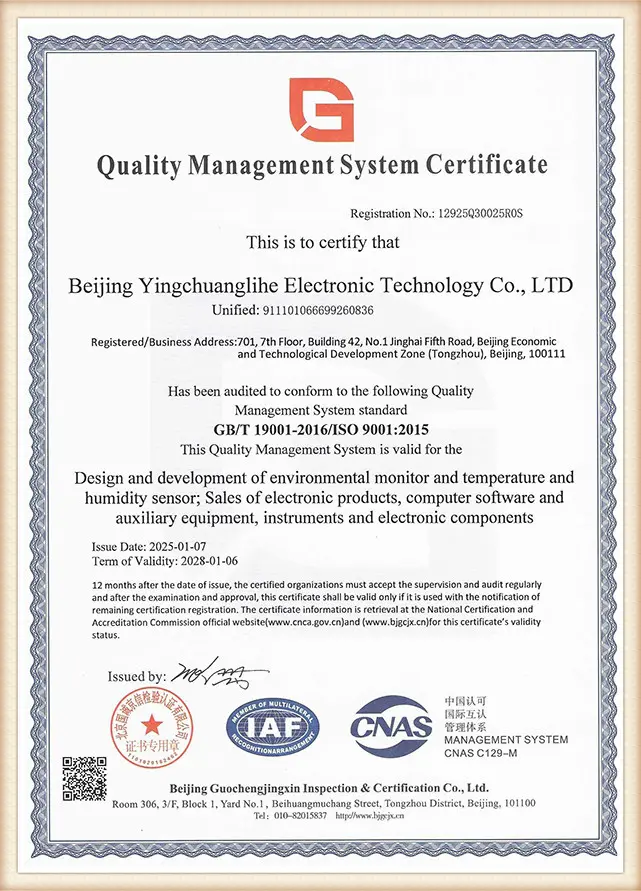
Over nearly two decades of production, Beijing Yingchuanglihe has established robust manufacturing foundations that guarantee high performance and swift delivery cycles. Below are our documented credentials, factory galleries, and certificates:
Our environmental sensors are deployed across critical infrastructure sectors:
Understanding the architectural differences between environmental nodes determines deployment efficiency. Below are the specific hardware characteristics of our leading product designs:
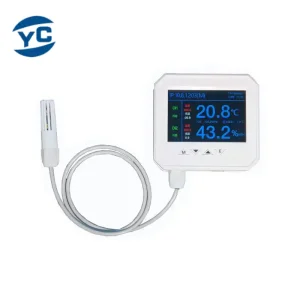
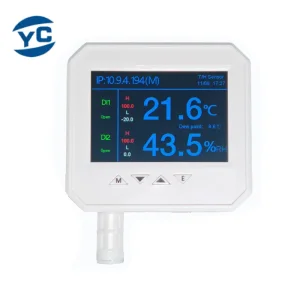
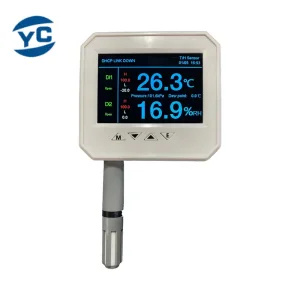
Model: APEM-5930
Core Parameters: Temperature + Humidity + Dew Point
Power Options: Supports standard IEEE 802.3af PoE power supply alongside DC12~48V auxiliary inputs. Ideal for data centers requiring high-speed reporting intervals without battery life constraints.
Model: APEM-5930P
Core Parameters: Atmospheric Pressure + Temperature + Humidity + Dew Point
Key Functions: Specifically designed to assess room airflow and control pressure differentials to prevent cross-contamination in sterile labs and microelectronics cleanrooms.
Model: APEM-5930E
Core Parameters: Temperature + Humidity + Dew Point + Optional Probes
Key Functions: The probe sensor is separated from the main network module via a high-durability cable (1-3 meters option), allowing data tracking inside ovens, growth chambers, or localized air ducts.
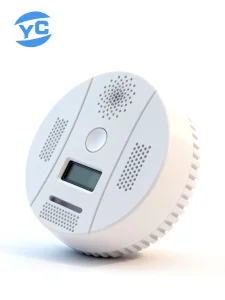
Model Options: APEM-5930G-IAQ-CO / SO₂-NO₂ / TVOC-O₃ / O₂-H₂S
Core Parameters: Selectable harmful gases, organic volatile chemicals, temperature, and humidity.
Key Functions: Designed for industrial safety, early-warning setups, and intelligent building ventilation control with optional relay outputs for direct alarm integration.
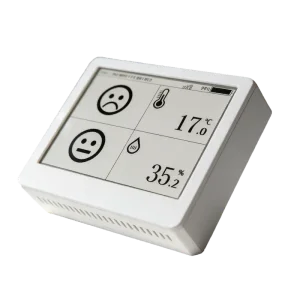
Model: APEM-5736 LORA
Core Parameters: Temperature + Humidity + Dew Point
Key Functions: Utilizes low-power wide-area LoRa transmission to send regular reports across long distances. Designed for remote storage, agricultural greenhouses, and large-scale industrial warehouses.
Deploying LPWAN hardware across borders requires compliance with regional radio frequency allocations. Yingchuanglihe manufactures all LoRaWAN transmitters to comply with localized standards, supporting configurable frequencies configured via firmware.
Our engineering roadmap is focused on integrating ultra-low-power AI inference (TinyML) directly at the sensor node. This will allow our environmental devices to detect anomalies in climate control systems or recognize trace gas spikes locally before transmitting data over the air, saving bandwidth and battery power.
Access expert technical answers to common queries regarding LoRaWAN node deployments, power budgets, and sensor calibrations:
Battery life depends on report interval, payload size, and the Spreading Factor (SF) used. For example, a node transmitting a 10-byte payload every 15 minutes at SF7 draws minimal charge, allowing a 19000mAh Li-SOCl₂ battery to last up to 10 years. We include precise energy profiles in our sensor datasheets to help estimate operational lifespan under various conditions.
We recommend calibrating temperature and humidity sensors every 12 to 24 months, depending on exposure to airborne particulates. Gas sensors (such as CO, H₂S, and SO₂) should be calibrated annually using reference gases to maintain precision. Our modular designs allow for easy sensor replacement or on-site recalibration.
Yes, our dual-mode models (such as the APEM-5930W) use wired Ethernet as the primary connection, while supporting Wi-Fi as an automatic backup. If the Ethernet connection drops, the sensor seamlessly switches to Wi-Fi to keep monitoring data continuous.
Yes. Our Ethernet sensors support standard Modbus TCP, SNMP, and HTTP protocols, enabling direct integration into SCADA systems, building management software (BMS), and cloud platforms like AWS and Azure IoT without requiring external converters.
Select from our specialized environmental tracking and gas monitoring nodes, designed for precision, reliability, and seamless integration in demanding enterprise environments.
 YCLH Sensor