Explore our high-precision B2B environmental monitors incorporating advanced telemetry, modular probes, and certified reliability.

Designed for rigorous B2B IAQ tracking, incorporating high-sensitivity TVOC and HCHO electrochemical cells alongside Swiss-made capacitive temperature/humidity sensors.
Technical Specifications
Ultra-low power RF telemetry sensor utilizing sub-GHz LoRaWAN protocol. Features up to 5 years battery autonomy for deep-indoor and agricultural deployments.
Technical Specifications
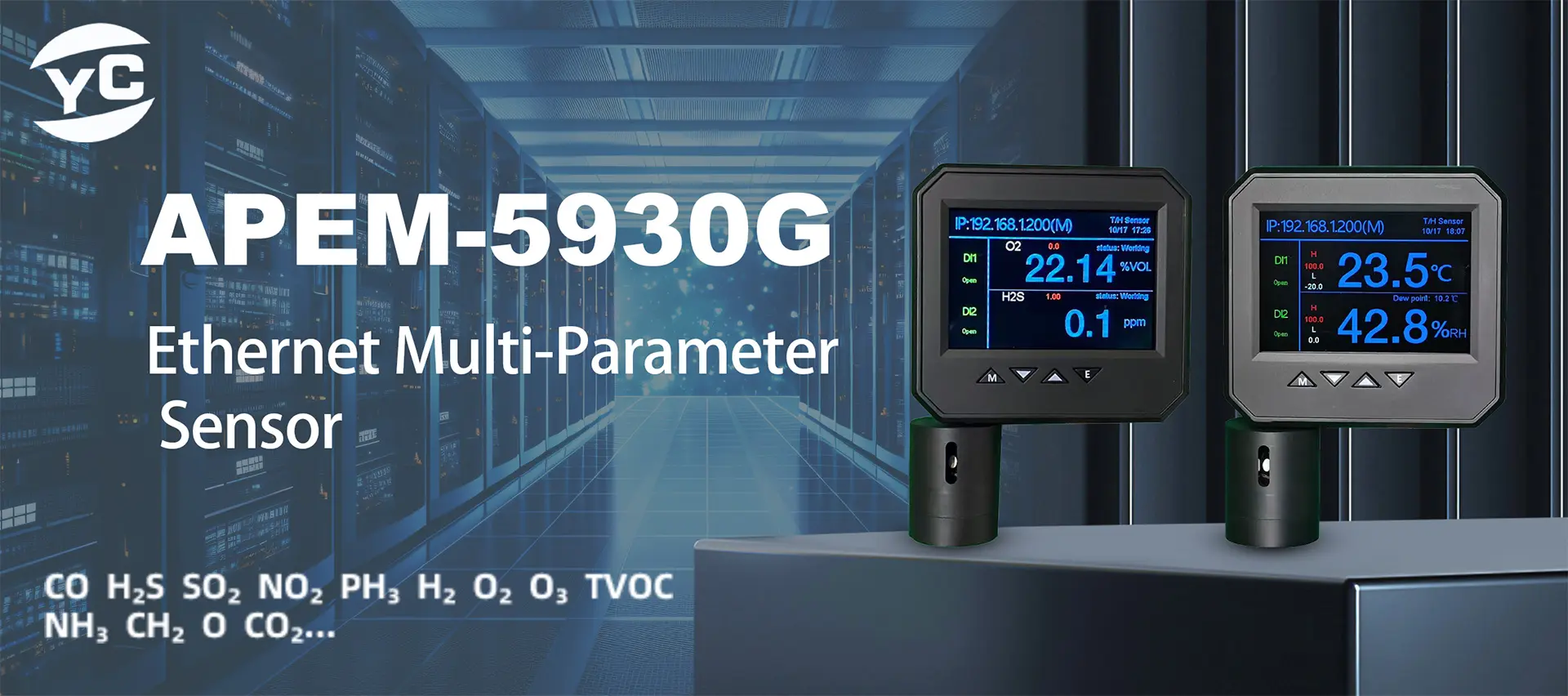
Industrial-grade multi-gas monitor with auxiliary POE support. Measures Oxygen levels and dangerous Hydrogen Sulfide gas in industrial smart wells and pipelines.
Technical Specifications
Multi-parameter atmospheric sensor ideal for cleanrooms and laboratories. Evaluates microclimate airflow changes and controls differential pressures.
Technical Specifications
Dual-mode monitoring terminal offering stable wired Ethernet connections alongside an integrated WiFi module for failover wireless transmission.
Technical Specifications
Real-time toxic gas analyzer and thermal log module. Offers rapid response rates for chemical processing plants and urban infrastructure networks.
Technical Specifications
Fully compliant CE-marked sensor transmitter equipped with customized external probes (1-3 meters) for tight machinery chambers and duct mountings.
Technical Specifications
Enterprise-class carbon monoxide and indoor environmental monitor. Supports PoE and RS-485 interfaces for building automation integration.
Technical SpecificationsFrom passive analog loops to active wireless ecosystems: The paradigm shift in B2B microclimate controls.
The industrial landscape for environmental monitoring has witnessed a fundamental transition from hardwired analog infrastructure to decentralized wireless networks. Historically, factory floors and logistics warehouses relied on legacy 4-20mA current loops or RS-485 Modbus networks. While stable, these configurations present high installation costs, vulnerability to physical cable degradation, and limited spatial resolution.
Today, the integration of LoRaWAN, Zigbee, WiFi, and Bluetooth Low Energy (BLE) has revolutionized telemetry. Modern IoT-enabled humidity monitors leverage these wireless communication stacks to provide scalable, dynamic coverage. For multi-parameter applications (including dry-bulb temperature, relative humidity, dew point, and VOCs), wireless deployment cuts physical implementation overheads by up to 70% while improving real-time spatial mapping.
Within the European Economic Area (EEA) and global markets aligning with European standards, the CE marking is a mandatory indicator of product compliance. It signifies that wireless humidity transmitters conform to stringent directives, including:
Evaluating long-term calibration stability, power consumption, and mechanical ingress protection.
High-grade monitors utilize imported capacitive polymer micro-chips (from Switzerland or Germany). Procurement specifications must demand a low annual drift rate (e.g., <0.25% RH/year) and precision margins of ±1.5% to ±2.0% RH to minimize recalibration cycles in high-humidity applications.
Wireless networks must balance telemetry range and battery usage. Standard LoRaWAN transmitters operate on duty cycles (e.g., sending measurements every 15 minutes) to achieve 5+ years of battery life. WiFi monitors, while bandwidth-rich, require PoE or local power backups.
Sensor probes require exposure to ambient air, but electronics must resist dust, moisture, and chemical washes. Premium suppliers utilize sintered metal filters and IP65/IP67 rated enclosures to shield the internal printed circuit board (PCB) assembly from contamination.
Enterprise capacity engineered to satisfy global OEM/ODM demands with high-precision environmental electronics.
Established in 2007, Beijing Yingchuanglihe Electronic Technology Co., Ltd. (YCLI) is a high-tech manufacturer specializing in smart environmental telemetry. With our state-of-the-art production facility and technical design office, we supply global B2B clients with CE, FCC, and RoHS-certified wireless transmitters, multi-gas monitors, and comprehensive software solutions.
How automation and vertical integration inside Chinese smart factories drive global cost-efficiency and delivery speed.
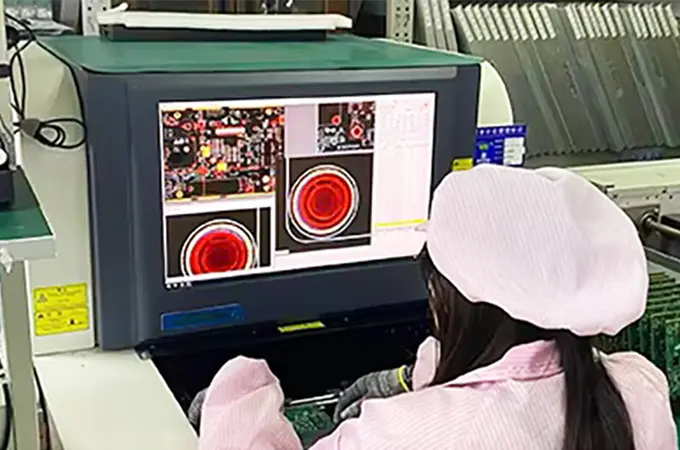
The manufacturing of advanced wireless humidity monitors is no longer just about PCB assembly; it is about automated calibration and supply chain resilience. Under China's Industry 4.0 initiative, modern sensor factories utilize fully integrated production lines where calibration, quality control, and testing are automated.
For high-precision capacitive sensors, humidity calibration is the most time-consuming phase. By utilizing multi-chamber automated calibration systems, our factory can subject thousands of sensors to dynamic temperature-humidity sweeps concurrently. This ensures that every unit shipped meets its certified accuracy curves while maintaining high throughput.
Our raw material supply chain provides a competitive edge in B2B distribution. Located in China's key industrial electronics hubs, YCLI maintains strategic partnerships for precision injection molding, SMT assembly, and micro-chip sourcing. This ecosystem allows us to respond to large-volume OEM orders and ship completed batches within shorter lead times compared to Western counterparts.
Over 18 years of technical milestones, partnerships, and achievements in environmental telemetry.
Company founded. Developed the initial intelligent environmental monitoring terminal based on TCP/IP network protocol alongside version 1.0 of our central monitoring software.
Partnered with Mocha Software to launch the TH-5939 series of environmental monitors supporting the SNMP network management protocol.
Collaborated with COMLAB (Switzerland) to introduce the protective TH-5869 Ethernet environmental monitor, deployed in Beijing-Kowloon and Beijing-Shanghai high-speed rail projects.
Launched the APEM-6100 in partnership with Founder Technology, introducing early Power over Ethernet (PoE) functionality to B2B monitoring devices.
Collaborated with Foxconn (Taiwan) to standardize YCLI's cleanroom environmental monitoring solutions across advanced manufacturing plants.
Partnered with Baidu to deploy the next-generation APEM-5900 Ethernet intelligent monitoring terminal inside Baidu's Yangquan Data Center.
Introduced a smart solutions system to expand our monitoring software framework horizontally across municipal and infrastructure applications.
Launched an integrated outdoor cabinet monitoring system, deployed in highway electronic toll collection (ETC) networks for Huawei and China Merchants Huaruan.
Designed and engineered edge computing gateways and road-test integrated boxes for Beijing's high-level autonomous driving test zones.
Contributed to intelligent computing infrastructure projects, providing key environmental telemetry setups for regional computing clusters.
Established joint business divisions with Beijing Enterprises Water Group and Beijing University of Civil Engineering and Architecture for smart pipeline and Beidou-enabled structural deformation monitoring.
High-reliability environmental telemetry designed to operate across diverse, challenging environments.






Answering key queries on CE compliance, sensor drift, wireless range, and Modbus software integration.
To pass CE Radio Equipment Directive (RED) testing, a wireless humidity monitor's radio interface (whether LoRaWAN, WiFi, or BLE) must maintain precise output limits on its broadcast frequency (e.g., 868 MHz for EU, 2.4 GHz for global WiFi). In addition, the device must pass EMC testing to ensure it does not fail or generate electrical noise when exposed to industrial machinery interference.
For controlled cleanrooms and cold chains, we recommend annual calibration sweeps. In harsh industrial environments containing airborne solvents, oil mist, or high-humidity condensation (e.g., agricultural greenhouses), sensors should be tested every six months. The use of sintered metal probe caps helps protect the sensor elements, prolonging calibration stability.
Under LoRaWAN configurations (e.g., APEM-5736), sending data packets once every 15 minutes enables up to 5 years of battery autonomy. WiFi-based transmitters consume higher current during handshake cycles; they are better suited for mains or PoE connections, though they can run on battery with sleep-cycling protocols when configured correctly.
Yes. Our sensors support industrial communication protocols, including Modbus RTU (over RS-485), Modbus TCP (over Ethernet/WiFi), and SNMP. This compatibility allows direct integration with standard building management systems (BMS), SCADA software, and PLC controllers without requiring proprietary middleware.
Deploy specialized telemetry configurations across your facility to monitor TVOCs, Ozone, and microclimates.
Designed for laboratories and high-tech cleanrooms. Tracks ambient air pressure alongside relative humidity and dry-bulb temperature.
Technical Specifications
Standard dual-connection monitoring unit. Highly customizable enclosure and labeling for regional B2B integration networks.
Technical Specifications
High-precision ozone gas sensor combined with ambient temperature/humidity telemetry. Supports PoE connections and automatic safety alarms.
Technical Specifications
Flexible monitoring station featuring external modular sensor probes. Ideal for air ducts and hard-to-access industrial environments.
Technical Specifications
Commercial-grade indoor air quality module. Monitors TVOCs, ozone concentrations, and ambient temperature/humidity via Modbus TCP protocols.
Technical Specifications
Premium B2B remote-probe humidity transmitter. Offers reliable measurement in chambers and industrial environments with remote probe configurations.
Technical Specifications
Integrated multi-parameter air quality device monitoring Carbon Monoxide, dry bulb temperature, dew point, and relative humidity.
Technical Specifications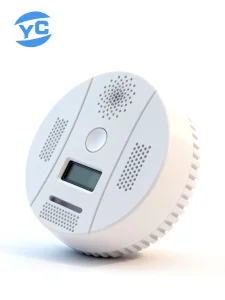
High-performance indoor transmitter utilizing secure sub-GHz radio links. Tracks temperature, humidity, and atmospheric pressure with minimal battery drain.
Technical Specifications YCLH Sensor