Choosing a reliable China manufacturer requires more than comparing prices, product photos, and delivery promises. A Low-Power Data Logger may sit inside a greenhouse, cold-chain vehicle, laboratory cabinet, or remote monitoring station for months. Its enclosure must resist dust and moisture, while its battery should support stable recording without frequent maintenance. Firmware quality matters just as much as sensor compatibility. Small errors can become expensive when data supports equipment decisions, compliance records, or product quality reviews.
This guide examines China’s leading manufacturers through practical and technical criteria. We consider power consumption, sampling accuracy, memory capacity, communication options, calibration support, and production consistency. Real experience matters. Factory capability, testing procedures, certifications, and after-sales responsiveness also deserve careful attention. Supplier claims should be checked against datasheets, sample testing, and customer feedback. Not every impressive specification reflects field performance. Some manufacturers provide excellent hardware but limited software support; others offer flexible customization but inconsistent documentation. That is worth admitting. Buyers should request test units, inspect battery behavior under real sampling intervals, and confirm how exported data appears on a typical computer. A credible manufacturer can explain these details clearly, not hide behind broad marketing language. This overview aims to help engineers, distributors, and procurement teams compare options with greater confidence. The final choice should match the application, environment, budget, and required evidence. Reliable data begins with careful selection.
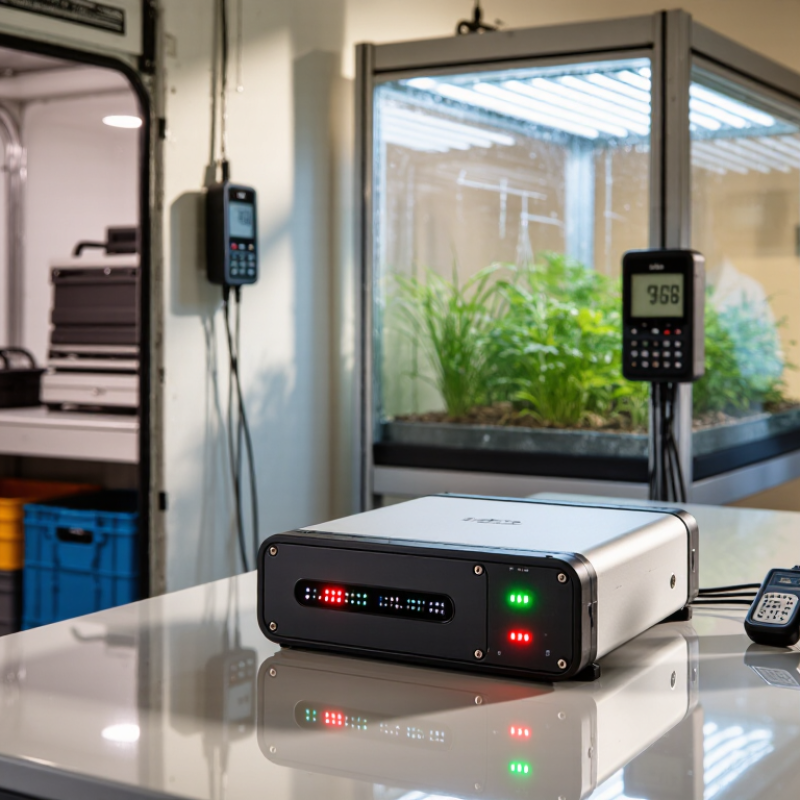
A low-power data logger records temperature, humidity, pressure, voltage, or movement while using minimal energy. It usually combines a sensor, microcontroller, memory, clock, and battery. During idle periods, the controller enters sleep mode. It wakes only when sampling or transmitting data. This design supports remote equipment, cold-chain containers, buildings, and outdoor monitoring points.
The need is expanding. IoT Analytics estimated 18.8 billion connected IoT devices worldwide by the end of 2024, increasing pressure on battery maintenance and network efficiency. The International Energy Agency reported that global data-center electricity use reached about 460 TWh in 2022. It could exceed 1,000 TWh by 2026. A logger consumes far less, but thousands of devices still create a practical energy burden. Small savings matter.
When comparing manufacturers, examine sleep current, sampling accuracy, battery capacity, memory type, and communication intervals. A logger drawing 10 microamps in standby may still drain quickly if its radio activates too often. Field testing should include cold temperatures, weak signals, and irregular sampling. Laboratory figures can look impressive. Real sites are less polite. I have seen battery estimates fail because transmission power and sensor warm-up time were ignored. The best specification is not always the best deployment choice. Clear calibration records, traceable test methods, and published uncertainty data provide stronger evidence than a low-power label alone.
| Data Logger Dimension | Typical Technical Range | What It Means | Common Application | Selection Consideration |
|---|---|---|---|---|
| Definition | Battery-powered measurement device with low standby and operating current | It records sensor readings at scheduled intervals while minimizing energy consumption. | Long-term monitoring in locations without continuous mains power | Confirm the required measurement interval, sensor type, and expected deployment period. |
| Measurement Interval | 1 second to 24 hours or longer | The interval determines how frequently the logger samples and stores data. | Fast interval for vibration or temperature changes; long interval for building or environmental trends | Shorter intervals provide more detail but generally increase power use and memory requirements. |
| Battery Life | Several months to more than 5 years | Actual battery life depends on sampling frequency, sensor excitation, storage, wireless communication, and temperature. | Remote environmental stations, warehouses, transport monitoring, and equipment rooms | Use the manufacturer’s battery-life calculation for the exact operating profile rather than relying on a nominal figure. |
| Standby Current | Typically in the microampere range | Low standby current helps preserve battery capacity between measurements or communication events. | Applications that remain dormant for long periods between readings | Check whether the stated value includes the sensor, display, memory, and communication module. |
| Operating Temperature | Commonly about −20°C to +60°C; extended designs may cover wider ranges | The operating range describes the ambient conditions in which the logger is designed to function. | Cold storage, industrial rooms, outdoor monitoring, and supply-chain logistics | Battery performance and sensor accuracy can change significantly at temperature extremes. |
| Internal Memory | From several thousand to millions of readings | Storage capacity depends on the number of channels, timestamp format, data resolution, and file structure. | Standalone logging where data cannot be downloaded frequently | Estimate storage using: number of channels × readings per channel × deployment duration. |
| Temperature Accuracy | Commonly approximately ±0.2°C to ±0.5°C | Accuracy indicates the difference between the recorded temperature and the reference value under specified conditions. | Cold-chain monitoring, laboratories, HVAC checks, and room condition surveys | Review the complete accuracy specification, including sensor error, resolution, and temperature range. |
| Relative Humidity Accuracy | Commonly approximately ±2% RH to ±5% RH | Humidity accuracy is usually specified over a defined temperature and humidity range. | Museums, warehouses, archives, greenhouses, and building condition monitoring | Consider long-term sensor drift, condensation protection, and calibration requirements. |
| Input Channels | One to multiple analog, digital, or pulse inputs | Channels define how many sensors or external signals can be monitored simultaneously. | Energy monitoring, machine status recording, and multi-point environmental measurement | Verify input type, signal range, isolation, excitation voltage, and channel scan behavior. |
| Supported Signals | Examples include thermistor, RTD, voltage, current, pulse, contact closure, and digital sensors | Different input interfaces allow the logger to connect with different sensor technologies. | Temperature, pressure, flow, energy, door status, and equipment runtime monitoring | Match the logger input to the sensor output and confirm connector and wiring compatibility. |
| Data Storage Format | CSV, TXT, binary, or software-specific formats | Stored data normally includes timestamped measurements and may include alarms or device status. | Data analysis, compliance records, engineering diagnostics, and quality control | CSV or other open formats simplify transfer to spreadsheet and statistical software. |
| Data Retrieval | USB, wired serial interface, removable memory, Bluetooth Low Energy, cellular, or LoRaWAN | Retrieval method determines how data is accessed and whether remote monitoring is possible. | Local download for low-cost deployments; wireless access for distributed or inaccessible locations | Wireless communication normally increases energy use and may require network coverage or subscription service. |
| Sampling and Logging Modes | Fixed interval, triggered, alarm-based, or event-driven | Event-driven logging can reduce unnecessary readings when the monitored condition is stable. | Door opening, threshold alarms, machine faults, and intermittent environmental events | Use a mode that captures the required event without creating excessive data or battery consumption. |
| Timekeeping | Internal real-time clock with selectable timestamp resolution | The clock assigns a date and time to each stored measurement. | Regulated monitoring, shipment records, and correlation with other systems | Check clock drift, time-zone handling, daylight-saving behavior, and synchronization options. |
| Ingress Protection | From indoor enclosures to IP-rated outdoor housings | An IP rating indicates protection against solids and water under defined test conditions. | Indoor monitoring, outdoor weather stations, refrigerated areas, and washdown locations | Choose the enclosure according to dust, moisture, condensation, and cleaning exposure. |
| Calibration | Factory calibration with optional periodic verification or recalibration | Calibration establishes the relationship between the measurement output and a reference standard. | Quality assurance, laboratory work, food storage, pharmaceuticals, and regulated processes | Review calibration uncertainty, traceability, recommended interval, and available certificates. |
| Energy-Saving Features | Deep sleep, sensor power switching, scheduled transmission, and low-power wireless protocols | These features reduce energy use when the logger is not actively measuring or communicating. | Remote sites, solar-assisted systems, and multi-year deployments | Ensure the energy-saving mode does not conflict with response time or alarm requirements. |
| Typical Use Cases | Temperature, humidity, pressure, voltage, current, occupancy, flow, and equipment status | Low-power loggers are used wherever periodic measurement is more practical than continuous wired supervision. | Cold chain, agriculture, buildings, manufacturing, transportation, utilities, and research | Define the measurement objective first, then select the sensor, interface, enclosure, and communication method. |
Compare real battery performance, sampling accuracy, memory capacity, temperature range, and communication methods. Catalog prices are not enough. Real conditions matter.
Request test records using your intended sampling interval. Check sleep current, wake-up speed, transmission frequency, and battery-status monitoring. Run a sample for several weeks. Short demonstrations can mislead.
A calibrated reference logger can reveal measurement drift, timestamp errors, and missing records. Test both devices under the same conditions. Small differences may become serious later.
Certificates should show traceability, test dates, equipment details, and acceptable uncertainty. Ask whether the certificates match the actual device or sensor. Paperwork is not proof.
Check sensor compatibility, resolution, clock stability, enclosure protection, firmware controls, and data-export formats. For cold environments, request chamber-test readings. A brochure cannot show every weakness.
Confirm transmission range, antenna performance, security controls, and recovery after signal loss. Local storage should continue during network outages. Test inside a warehouse or transport container.
Ask about component traceability, inspection points, firmware testing, packaging, and final testing. Learn how failed units are isolated, repaired, documented, and retested. Details matter.
No. Some factories build excellent samples but struggle with repeat production. Review capacity and change-control procedures. An independent inspection may reveal rushed testing or uneven assembly.
A short pilot can expose heat drift, memory gaps, unstable connections, and rapid battery drain. Test during signal loss and temperature changes. One extra week may prevent expensive data loss.
Ask specific questions about customization, firmware ownership, failure diagnosis, updates, and after-sales response times. Answers should remain consistent. I would leave room for doubt.
A Low-Power Data Logger is a compact device designed to collect, store, and sometimes transmit measurements while using minimal energy. It is widely used for environmental monitoring, equipment maintenance, cold-chain management, agriculture, and remote installations. This article explains the main factors to consider when evaluating Chinese manufacturers, including product reliability, measurement accuracy, battery performance, customization capabilities, production quality, technical support, and delivery consistency.
It also introduces how to compare manufacturers without focusing only on price. Important technologies and features include sensor compatibility, memory capacity, sampling intervals, communication options, data security, software usability, weather resistance, and calibration services. To choose the right supplier, buyers should clearly define their monitoring conditions, required measurement range, operating environment, communication needs, order volume, and after-sales expectations. A careful comparison of technical specifications, testing procedures, certifications, and support services can help ensure that the selected manufacturer provides a dependable solution for long-term data collection.

 YCLH Sensor