Choosing a Multi Parameter Sensor for global use is not simply a matter of counting probes. It is a decision about data quality, field conditions, service access, and long-term confidence. A device that performs well in a clear laboratory tank may struggle in muddy rivers, coastal water, or warm industrial channels.
Professor Steven C. Chapra, a respected water-quality engineering authority, offers a useful reminder: “A sensor does not replace understanding; it strengthens it.” That principle matters when buyers compare pH, dissolved oxygen, conductivity, turbidity, temperature, and other measurements in one instrument. More parameters are not always better. They can increase calibration work, power consumption, and the risk of confusing weak data with complete data.
Look closely at the operating scene. Will the sensor face biofouling, suspended solids, pressure changes, or frequent transport? Check measurement ranges, accuracy, response time, calibration procedures, data logging, and communication options. A field team in Kenya may need cellular flexibility, while a buyer in Norway may prioritize cold-weather stability. Local technical support matters.
Certificates help, but they do not prove every field result. Ask for test methods, calibration records, replacement-part availability, and realistic battery performance. Consider total ownership cost, not only the purchase price.
No product is perfect. That is the uncomfortable part. Some specifications look impressive but remain difficult to verify. A careful buyer should request sample data, test the interface, and question unclear claims before committing. The right Multi Parameter Sensor should fit the water, the workflow, and the people using it.
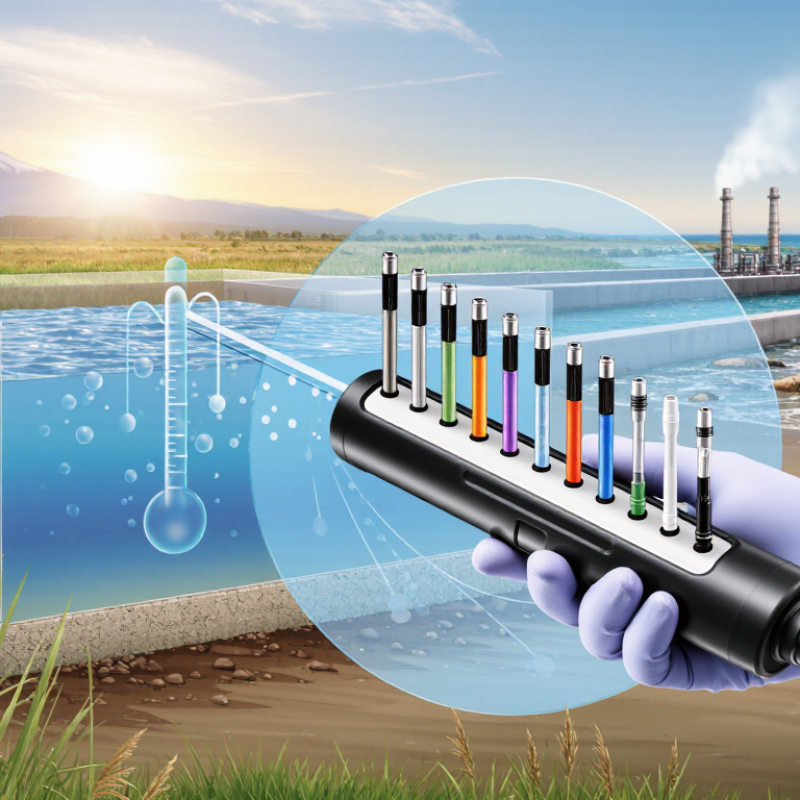
For global buyers, sensor selection should begin with the water matrix, not the product catalog. Drinking water, wastewater, groundwater, and process water create different measurement risks. EPA guidance commonly places drinking-water pH between 6.5 and 8.5 as a secondary standard. This range helps define an operating target, but it does not describe every water application. pH alone is not enough. Sample temperature, dissolved solids, suspended matter, and disinfectant residual can change sensor performance.
A practical specification should list pH, temperature, conductivity, dissolved oxygen, ORP, or turbidity only when each parameter supports a decision. Select materials that tolerate the matrix, such as resistant housings for corrosive samples. Check the stated pH range, temperature compensation, response time, cleaning method, and calibration interval. A field team should compare readings with traceable buffer solutions at regular intervals. Calibration drift is easy to miss. It may appear as a small change, then distort treatment decisions.
The 6.5–8.5 reference also requires careful interpretation. It is a useful screening boundary, not a universal legal limit for every country or water type. Not every sample behaves alike. Confirm local requirements before setting alarms or acceptance criteria. Review data from real samples, not only laboratory water. No sensor can repair poor sampling. Document failed readings, fouled probes, and unusual temperatures. That record exposes weaknesses honestly. A slightly imperfect trial often reveals more than a polished specification sheet. Choose a platform that stores raw values, calibration history, and quality flags, so operators can explain each result later.
Use the water matrix, expected concentration range, regulatory purpose, and field conditions to define the required sensor configuration before comparing suppliers.
| Water Matrix | Typical Application | Core Parameters | Useful Measurement Range | Recommended Sensor Features | Main Interferences or Risks | Priority | Selection Guidance |
|---|---|---|---|---|---|---|---|
| Drinking Water | Finished water, distribution networks, storage tanks, and treatment verification | pH, temperature, conductivity, turbidity, dissolved oxygen, oxidation-reduction potential | pH 6.5–8.5 as the EPA secondary drinking-water range; turbidity commonly measured from 0 to at least 10 NTU; conductivity depends on source-water mineral content | Low-maintenance pH reference system, automatic temperature compensation, low-level turbidity optics, protective flow-through or immersion housing | Low ionic strength can make pH measurement slower; bubbles and suspended particles can affect optical readings; disinfectants may influence ORP | High | Choose a sensor that clearly identifies pH accuracy around the 6.5–8.5 decision range and supports traceable calibration with certified buffers. |
| Raw Surface Water | Rivers, lakes, reservoirs, and intake monitoring | pH, temperature, turbidity, conductivity, dissolved oxygen, chlorophyll or blue-green algae where relevant | pH commonly near 6–9; turbidity may range from less than 1 NTU to hundreds of NTU during storms; dissolved oxygen from anoxic conditions to air-saturated water | Anti-fouling protection, wiper or copper-alloy options where appropriate, wide-range turbidity optics, rugged cable and deployment hardware | Biofouling, sediment abrasion, changing light conditions, algae, and rapidly varying temperature | High | Prioritize cleaning intervals, fouling resistance, field serviceability, and data logging over laboratory-level features that cannot be maintained on site. |
| Groundwater | Well monitoring, aquifer studies, remediation, and source-water assessment | pH, temperature, conductivity, dissolved oxygen, ORP, water level, selected ions or contaminants | pH may be outside 6.5–8.5 depending on geology or contamination; conductivity can vary from very low to several thousand µS/cm | Long-term stability, low-power operation, pressure-rated housing, reliable reference junction, and compatibility with low-flow sampling | Low flow, low oxygen, high dissolved minerals, iron or manganese deposits, and chemical incompatibility with wetted materials | High | Do not reject a sensor solely because the water is outside the EPA secondary pH range; select a suitable operating range and document the site-specific baseline. |
| Municipal Wastewater Influent | Collection systems, lift stations, preliminary treatment, and process control | pH, temperature, conductivity, turbidity or suspended solids, dissolved oxygen, ORP | pH may vary broadly, often approximately 5–10; suspended solids can be high and highly variable; dissolved oxygen may be near zero | Heavy-duty immersion assembly, anti-clogging design, automatic cleaning, replaceable sensing elements, and rapid response | Grease, solids, biological growth, fibers, sulfides, and coating of optical windows or pH glass | High | Specify cleaning and maintenance requirements together with accuracy. A sensor that is accurate only when clean may be unsuitable for continuous influent service. |
| Biological Wastewater Treatment | Aeration basins, activated sludge, nitrification, denitrification, and process optimization | Dissolved oxygen, pH, temperature, ORP, conductivity, suspended solids | Dissolved oxygen commonly controlled from low levels to air-saturation conditions; pH often controlled near neutral but depends on the treatment process | Fast dissolved-oxygen response, robust membrane or optical DO technology, anti-fouling cleaning, low-drift pH measurement, and process integration | Biological fouling, air bubbles, turbulence, solids coating, chemical dosing, and sensor placement effects | High | Match the sensor response time and installation depth to the control loop. Verify performance under actual mixing and aeration conditions. |
| Industrial Process Water | Cooling water, boiler feedwater, rinsing, production lines, and closed-loop systems | pH, temperature, conductivity, dissolved oxygen, ORP, pressure, and selected process-specific ions | May require low-conductivity measurement below 10 µS/cm or high-conductivity measurement above 100 mS/cm, depending on the process | Material compatibility, high-temperature and pressure rating, isolated outputs, configurable alarms, and sensor validation capability | Extreme temperature, pressure, solvents, oils, scale, electromagnetic noise, and rapid chemical changes | High | Define maximum temperature, pressure, chemical exposure, and conductivity before selecting the probe body, seals, electrodes, and communication interface. |
| Brackish Water | Estuaries, coastal intakes, aquaculture, and desalination pretreatment | Conductivity or salinity, temperature, pH, dissolved oxygen, turbidity, ORP | Conductivity may range from approximately 1 to 50 mS/cm; pH interpretation should account for salinity and measurement method | Seawater-compatible materials, conductivity cell with an appropriate cell constant, temperature compensation, and anti-fouling construction | Chloride corrosion, biofouling, salinity-dependent calibration, pressure effects, and suspended matter | Medium | Ask whether the output is conductivity, practical salinity, or another calculated value. These are related but not interchangeable without assumptions. |
| Seawater | Marine monitoring, aquaculture, desalination, and coastal research | Conductivity, temperature, salinity, pH, dissolved oxygen, turbidity, depth or pressure | Typical open-ocean salinity is near 35 practical salinity units; temperature and pressure ranges must be defined for the deployment depth | Titanium or suitable corrosion-resistant wetted materials, pressure-rated housing, stable reference system, and marine anti-fouling strategy | High chloride exposure, pressure, biofouling, gas bubbles, and differences between pH scales used in marine work | Medium | Confirm the pH scale, salinity algorithm, depth rating, and calibration method. Avoid comparing outputs that use different seawater conventions. |
| Agricultural Drainage Water | Irrigation return flows, drainage canals, and nutrient-loss monitoring | pH, temperature, conductivity, turbidity, dissolved oxygen, nitrate where required | Conductivity may range from below 100 µS/cm to several thousand µS/cm; nitrate and turbidity can change significantly after rainfall or irrigation events | Wide conductivity range, replaceable optical components, anti-fouling protection, event-triggered logging, and optional nutrient sensing | Soil particles, algae, fertilizer residues, organic matter, and changing ionic composition | Medium | Use conductivity as a screening parameter, not as a direct substitute for laboratory-specific nutrient analysis unless the relationship is validated locally. |
| Aquaculture Water | Fish tanks, hatcheries, ponds, recirculating systems, and marine farms | Dissolved oxygen, temperature, pH, conductivity or salinity, ORP, ammonia or other species-specific parameters | Dissolved oxygen is often managed near species-specific targets; pH and salinity depend on the cultured species and water type | Fast DO response, continuous logging, alarm outputs, low-maintenance design, gentle flow-through installation, and optional ammonia measurement | Biofouling, feed residues, bubbles, high biological oxygen demand, and sensor damage during tank cleaning | High | Prioritize dependable dissolved-oxygen alarms and temperature compensation. Define species-specific operating limits rather than using drinking-water criteria. |
| Laboratory or Grab-Sample Testing | Verification, compliance support, research, and calibration checks | pH, temperature, conductivity, turbidity, dissolved oxygen, ORP, and laboratory-selected analytes | Use the full range required by the method; pH 6.5–8.5 is a reference interval for a drinking-water context, not a universal limit for every matrix | High repeatability, replaceable electrodes, documented calibration procedures, data export, and compatibility with certified reference materials | Cross-contamination, temperature differences, sample aging, inadequate rinsing, and calibration errors | Context | Use laboratory results to validate field sensors, but compare measurements collected at the same time and under the same temperature and sampling conditions. |
Regulatory context: The U.S. Environmental Protection Agency lists pH 6.5–8.5 as a secondary drinking-water standard related to aesthetic and operational considerations. It should be used as a drinking-water screening reference, not as a universal acceptance range for wastewater, seawater, groundwater, or industrial process water. Final sensor specifications should also state accuracy, resolution, calibration interval, operating temperature, pressure rating, materials compatibility, cleaning method, communication protocol, and applicable local regulations.
Start with the sample, not the product catalog. Drinking water, wastewater, groundwater, and process water behave differently. Temperature, salts, solids, and disinfectants affect performance. A corrosive sample may need a resistant housing.
It is a useful drinking-water screening range. It is not universal for every water type or region. Confirm local requirements before setting alarms. Real samples may behave unexpectedly.
Choose only parameters linked to decisions. Common options include pH, temperature, conductivity, dissolved oxygen, oxidation-reduction potential, and turbidity. Extra channels can increase maintenance without improving control.
Specify the water matrix, temperature range, pressure, and cleaning cycle. Review repeatability, response time, drift, and interference. One combined accuracy number is insufficient. Each parameter needs its own statement.
Compare results in milligrams per liter, not only percentage saturation. Test near 5, 8, and 12 milligrams per liter. Include temperature changes and fouling exposure. Salinity can affect readings.
A twelve-month interval may suit dusty or humid sites. Cleaner facilities might use twenty-four months after field verification. Do not trust the longest interval automatically. Drift can begin quietly.
Check communication support, register maps, scaling factors, timestamps, alarms, and error codes. Test the actual controller, cable, and network. Bench testing alone can mislead. Electrical noise may reveal hidden problems.
Include calibration, gateways, power, spare parts, travel, service fees, and replacement risk. A low purchase price may hide downtime costs. My first spreadsheet missed downtime. That was expensive. Leave room for uncertainty.
Choosing a Multi Parameter Sensor for global use starts with understanding the water matrix and identifying the parameters that matter most, such as pH, dissolved oxygen, conductivity, temperature, and turbidity. Define measurement requirements with practical reference ranges, including pH guidance of 6.5–8.5, then set accuracy targets according to ISO 15839 and the specific demands of dissolved-oxygen monitoring. The selected sensor should also demonstrate suitable IP68 protection, electromagnetic compatibility, and electrical safety for reliable operation in varied environments.
A complete evaluation should compare calibration intervals, communication protocols, software compatibility, maintenance needs, and five-year ownership costs rather than focusing only on the initial purchase price. Before deployment, request independent ISO 17025 test results and review certification records relevant to each target region. This process helps buyers confirm measurement performance, regulatory readiness, long-term reliability, and total operational value.

 YCLH Sensor